 ABOUT THE POEM:
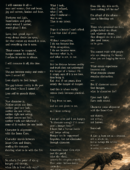
The Walk of Character explores a question beneath ordinary explanations of human behaviour: what remains when intelligence, experience, emotion, desire, meaning, and hope can no longer explain why a person continues to move? The poem begins by separating abilities from character. Cleverness can appear in a young child; maturity can be observed in a stray dog; and forms of understanding can be found in insects. The poem argues that none of them constitutes the walk. Intelligence can explain. Experience can inform. Emotion can motivate. Character, in the poem’s framework, determines the direction of movement through the Inner Core. The Inner Core is presented as the source of a deeper form of persistence. Its movement is not described as a pursuit of reward, recognition, or meaning. Instead, the poem imagines a condition in which external reasons have fallen away and only one course of action remains possible. The line “If nothing else can be done, and if only this can be done, then this will be done” expresses that condition without promising success. It describes continuity when victory is no longer the measure. This distinction leads to the poem’s central proposition: “Walking is structural movement, not cognitive movement.” It proposes that action cannot always be understood solely through conscious calculation, emotion, impulse, duty, or hope. Beneath these changing states, the poem places character as an organising structure. “Character precedes cognition” expresses this proposed order of explanation. It does not mean that character is biologically independent of learning or environment; within the poem, character is treated as more fundamental than the thoughts used to describe a particular action. The comparison between an ant’s grief and a god’s grief widens the poem’s field beyond human status. “An ant’s grief is no smaller than a god’s—only lighter” challenges the assumption that importance belongs only to beings with greater power, intelligence, or stature. The image distinguishes the significance of an experience from the scale of the being that carries it. The poem also refuses to confuse persistence with control. The universe may prevail; circumstances may determine outcomes. Yet the speaker insists that the universe will not choose on his behalf. It is a claim about response: external forces may constrain the path, but they do not automatically supply the speaker’s inner direction. The closing movement gathers these ideas into a declaration. When explanation ends, meaning expires, hope falls silent, and desire burns away, structure remains. The final line—“Ronie Dinosaur is walking”—functions not simply as a signature or motivational slogan, but as the poem’s conclusion: continuity is expressed through movement. The Walk of Character belongs to the larger inquiry of Existential Engineering: whether a life can continue without relying on conventional promises of meaning, love, or hope. It asks readers to consider character not as a public reputation or moral label, but as an underlying pattern revealed over time. The walk is not presented as a philosophy to admire from a distance. It is presented as an architecture to examine. This distinction matters throughout the poem.
The Walk of Character
Cleverness belongs even
to a five-year-old child.
Maturity belongs even
to a stray dog.
Understanding belongs
to the honeybee,
the housefly,
and the ant.
Yet none of these
is the walk.
There is only one walk—
the desire
of the Inner Core,
untouched
by ego
or greed.
It is made possible
by character.
Continuity is not chosen
for reward or meaning.
If nothing else can be done,
and if only this can be done,
then this will be done.
Man,
woman,
dog,
or god—
all of you,
sit holding your ears,
facing the wall.
The walk asks
for neither intelligence
nor cleverness,
neither maturity
nor experience,
neither calculation
nor impulse.
An ant’s grief
is no smaller
than a god’s—
only lighter.
I speak
of substance—
of character—
which only time
can uncover
or bury forever.
My character,
I know,
will not permit
my defeat.
The universe
may prevail,
but it will never
choose
on my behalf.
What is,
is.
What isn’t,
isn’t.
Walking
is structural movement,
not cognitive movement.
Character
precedes cognition.
The walk
is not
a philosophy.
It is
an architecture.
I do not think
my way into it.
I do not act
my way into it—
through duty,
through impulse,
through karma,
or through hope.
Intelligence
explains.
Experience
informs.
Emotion
motivates.
Character
determines
the direction
of movement
through
the Inner Core.
When explanation ends,
when meaning expires,
when hope falls silent,
when desire itself
has burned away,
structure
still remains.
And while
structure remains—
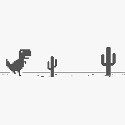
Ronie Dinosaur
is walking.