 ABOUT THE POEM:
 Chapter 47, “Nutrition,” stages a blunt reversal of priorities: mind bows to body, not out of hedonism but out of triage. The opening aphorism—familiar, almost polite—gets immediately gutted. A sound mind in a failing body is an academic ornament. The speaker refuses ornament. This is a reckoning with maintenance, not meaning. Philosophy, once foregrounded, is demoted to a background process while the lamp’s “weight and shape” take center stage. That shift matters. It says: stop narrating, start stabilizing. The poem’s anger is disciplined. It isn’t the tantrum of entitlement; it’s the anger of overdue payment. The body has been “disrespected” by neglect, and the brain is indicted for letting it happen. This is not mind–body dualism; it’s a lawsuit against abstraction. The lungs asking for “one clean breath” reads like a last mercy petition, a small ask with enormous stakes. Generosity here isn’t charity to others; it’s austerity toward oneself—do the minimum required to keep the system online. Self-loathing appears (“disgraceful life”), but it’s quickly fenced. Losses are named, then qualified: many of them were never possessed. That clause rescues the poem from melodrama. It replaces grievance with inventory control. What remains—character—is not romanticized as saintly. It’s described in kinetic terms: bravado, courage, fearlessness, style. Style matters because it’s how force moves through constraint. The “roar” is deliberately comic-book large, cutting through chaos without pretending to master it. Reasons are absent; duty remains. That’s a key philosophical move. The poem rejects teleology without surrendering obligation. Action persists without justification. This is existentialism stripped of café smoke and put into work clothes. The Cobain line risks cliché but is defused by context. “Burn out” here does not mean spectacular self-destruction; it means arresting decay. “I am stopping the collapse” reframes intensity as maintenance, not martyrdom. The crude line about “holding up my shorts” lands because it insists on the unglamorous mechanics of survival. Gravity is real. So is embarrassment. Seriousness, here, is practical. The closing image—character without power as an earthworm aspiring to cobrahood—is unsentimental and correct. Ethics without capacity cannot act; ideals without calories are decorative. “Nutrition” thus names more than food. It’s sleep, breath, posture, attention—anything that converts character into force. The poem argues, without preaching, that integrity must be fueled or it becomes theater. This chapter doesn’t ask for hope. It demands upkeep.
Ronie Dinosaur Chapter 47 – Nutrition
A sound mind dwells in a sound body.
Yet if the body fails and falls,
what good is any mind at all?
This useless brain has let this flesh be disrespected,
never the reverse.
Time to settle the debt.
Nothing is lost in generosity:
let these lungs draw one clean breath,
just once.
It might be their last.
It has been a disgraceful life.
I have lost so much-
things I never even carried from birth.
Except this:
the character of this heart,
its bravado, its courageous, fearless style.
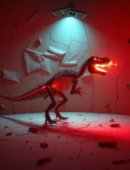
Ronie Dinosaur roars
amidst the chaos.
I am walking,
yet the reasons-
why all this bhaang-bhosda lies scattered,
why the raita is spread,
why any of it must be done-
those reasons are absent.
Still, I must do it.
I am bound by duty.
Philosophy now runs in the background;
the weight and shape of the lamp take center stage.
“Better to burn out than to fade away,”
Kurt Cobain said.
I am not fading-
I am stopping the collapse.
In the fight, I am holding up my shorts.
This is fucking serious.
Character without power
is like an earthworm
that cannot act like a cobra.



















[…] Ronie Dinosaur Chapter 47 – Nutrition […]