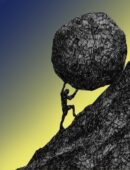
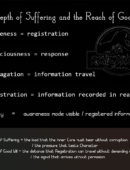
ABOUT THE POEM: In February 2002, at eighteen, the poem Claim emerged-a snapshot of a consciousness at the threshold of adulthood, grappling with the weight of expectation, the inertia of time, and the moral rigor of self-restraint. The speaker in Claim exists in a world that feels simultaneously active and inert. Clouds rain repeatedly; the same forces return year after year, and though the world might have changed outside the window, nothing changes within. The speaker’s agency is minimal: decisions go unassisted by time, luck fails to grant desire, and struggle becomes the measure of correctness rather than a path to growth. There is a pronounced sense of existential defensiveness, an internal policing of self-interest expressed in lines like, “even if I use air or water / it would weaken my claim.” Here, suffering is moralized: endurance is proof of integrity, and waiting becomes a principal virtue. Growth is presented as externalized-a forced lesson delivered by the world, by others, by an abstract idea of correctness. The language is quiet, reflective, constrained, and internalized, suffused with grey and black, waiting through years of stasis and moral vigilance. The pain in Claim is static, anticipatory, and self-justifying. It is the pain of a young adult trying to reconcile the inner sense of truth with the universe’s indifference, still tethered to the idea that correctness will eventually be acknowledged. The speaker at eighteen experiences a constrained anguish, locked between moral discipline and desire, with decay as an ever-present specter. Fast forward twenty-four years, and the evolved voice in Ledger Without Cushion (2026) presents the same core wound-the struggle against isolation, existential cost, and the absence of witnesses-but processed through experience, action, and confrontation with consequence. Here, the pain is dynamic, lived, and embodied. Unlike the defensive waiting of Claim, the speaker of Ledger has stepped outside the script prescribed by the world: the degree, the career path, the socially sanctioned life of comfort and predictability. Instead, the speaker earns, spends, drinks, collapses, and rebuilds with no guarantee, no soft landing, no external validation. This is the pain of someone who has accepted that suffering is inherent, unshaped by external approval, and that truth comes with its cost. Physicality-“forged iron bones that carried much”-and temporal rigor-years in rehab, a decade of alcohol-replace moral speculation. Loneliness is no longer merely the absence of attention; it is altitude, a rarefied place where no one stands to witness or cushion the fall. The contrast between “static” and “dynamic” problems-maintenance, regret versus depth, unused capacity-frames a pain that moves, that has mass and direction, that grows and transforms alongside the self. The poem emphasizes agency in suffering, refusing narrative softening: truth is not retroactively comforting, and alignment with the self is chosen, paid for, and unflinching. Comparing the two works illuminates a developmental arc in the experience of pain. Claim reflects pain experienced passively, filtered through rules of moral correctness, constrained by fear of selfishness, and mediated by hope for external validation. The young speaker sees endurance itself as evidence of integrity, but this framework also constrains action, freezes growth, and internalizes suffering in isolation. By contrast, Ledger Without Cushion reflects pain experienced actively, integrated into a life lived fully and without illusions. The speaker’s suffering is raw, witnessed only by self and world alike, and bears consequences-physical, emotional, and social. The maturation is evident: the same existential core-loneliness, exposure, and cost-remains, but the relationship to it has transformed. Where eighteen-year-old you waited for the universe to grant justice, forty-two-year-old you accepts that justice is irrelevant; only truth and alignment matter. The historical context reinforces this evolution. In 2002, the world felt both immense and indifferent, with time seeming slow, choices unrealized, and growth externally dictated. At eighteen, the self is tethered to abstract morality and anticipatory waiting. By 2026, lived experience has compressed these abstractions into visceral reality: strength, collapse, reward, and consequence are all tangible; waiting is replaced by motion, endurance by experimentation, and moral speculation by hard-earned insight. Both poems are connected by the same core wound, yet the response to it-reflective versus active, anticipatory versus confrontational-marks the difference between youthful internalization and adult agency. In conclusion, the pain that first appeared in Claim and matured in Ledger Without Cushion is fundamentally the same, but the relationship to it has evolved dramatically over twenty-four years. What began as stasis, moral vigilance, and anticipatory suffering has become exposure, dynamic engagement, and self-directed endurance. Both works document an unbroken thread of existential struggle, but the later poem demonstrates the evolution from passive endurance to active reckoning. The journey from the grey, constrained waiting of youth to the raw, self-aligned action of adulthood illuminates both the constancy and the growth of the human response to suffering, leaving a lineage of pain, witness, and uncompromising truth. https://roniedinosaur.com/2026/01/18/claim-24-years-ago-in-28-february-2002.html
Ledger Without Cushion
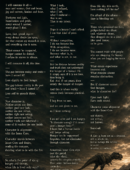
Verse 1 They chased the script the world supplied- degree, cash, house, child, pride. Neat receipts in tidy rows, soft landings when the balance goes.
Verse 2 I skipped the queue, learned life outside; streets knew my name before the guide. Earned heavy, spent free, paid for touch- forged iron bones that carried much.
Verse 3 Drank eleven years, fell hard and deep; rehab locked me in seven-five-eight sleep. Rose visible, then out of sight- strength and collapse, no buffer night.
Chorus Their loneliness hides in heated rooms; mine breathes wide beneath open moons. Their pain draws crowds and whispered aid; mine meets blank stares, unpaid. That is the difference, sharp and true: one ledger held, one bled through.
Verse 4 They think loneliness is empty space- mine is altitude, rarefied place. No one climbs this high to share the view; risk and refusal thins the crew.
Verse 5 Rehab didn’t erase, drink didn’t brand; strength didn’t save, grief didn’t land. What stays is witness, hunger plain: love that lingers when nothing remains.
Chorus Their loneliness hides in heated rooms; mine breathes wide beneath open moons. Their pain draws crowds and whispered aid; mine meets blank stares, unpaid. That is the difference, sharp and true: one ledger cushioned, one bled through.
Bridge Their troubles static-maintenance, regret; mine dynamic-depth and hunger yet. Static feels light, day to day; dynamic weighs more, yet moves its way.
Final Chorus I lived less false, paid full and early- maybe never cashed, but kept me surely. That is the difference, sharp and true: one ledger cushioned… one bled through.
When you login first time using a Social Login button, we collect your account public profile information shared by Social Login provider, based on your privacy settings. We also get your email address to automatically create an account for you in our website. Once your account is created, you'll be logged-in to this account.
DisagreeAgree
Connect with
I allow to create an account
When you login first time using a Social Login button, we collect your account public profile information shared by Social Login provider, based on your privacy settings. We also get your email address to automatically create an account for you in our website. Once your account is created, you'll be logged-in to this account.












 ABOUT THE POEM: In February 2002, at eighteen, the poem Claim emerged-a snapshot of a consciousness at the threshold of adulthood, grappling with the weight of expectation, the inertia of time, and the moral rigor of self-restraint. The speaker in Claim exists in a world that feels simultaneously active and inert. Clouds rain repeatedly; the same forces return year after year, and though the world might have changed outside the window, nothing changes within. The speaker’s agency is minimal: decisions go unassisted by time, luck fails to grant desire, and struggle becomes the measure of correctness rather than a path to growth. There is a pronounced sense of existential defensiveness, an internal policing of self-interest expressed in lines like, “even if I use air or water / it would weaken my claim.” Here, suffering is moralized: endurance is proof of integrity, and waiting becomes a principal virtue. Growth is presented as externalized-a forced lesson delivered by the world, by others, by an abstract idea of correctness. The language is quiet, reflective, constrained, and internalized, suffused with grey and black, waiting through years of stasis and moral vigilance. The pain in Claim is static, anticipatory, and self-justifying. It is the pain of a young adult trying to reconcile the inner sense of truth with the universe’s indifference, still tethered to the idea that correctness will eventually be acknowledged. The speaker at eighteen experiences a constrained anguish, locked between moral discipline and desire, with decay as an ever-present specter. Fast forward twenty-four years, and the evolved voice in Ledger Without Cushion (2026) presents the same core wound-the struggle against isolation, existential cost, and the absence of witnesses-but processed through experience, action, and confrontation with consequence. Here, the pain is dynamic, lived, and embodied. Unlike the defensive waiting of Claim, the speaker of Ledger has stepped outside the script prescribed by the world: the degree, the career path, the socially sanctioned life of comfort and predictability. Instead, the speaker earns, spends, drinks, collapses, and rebuilds with no guarantee, no soft landing, no external validation. This is the pain of someone who has accepted that suffering is inherent, unshaped by external approval, and that truth comes with its cost. Physicality-“forged iron bones that carried much”-and temporal rigor-years in rehab, a decade of alcohol-replace moral speculation. Loneliness is no longer merely the absence of attention; it is altitude, a rarefied place where no one stands to witness or cushion the fall. The contrast between “static” and “dynamic” problems-maintenance, regret versus depth, unused capacity-frames a pain that moves, that has mass and direction, that grows and transforms alongside the self. The poem emphasizes agency in suffering, refusing narrative softening: truth is not retroactively comforting, and alignment with the self is chosen, paid for, and unflinching. Comparing the two works illuminates a developmental arc in the experience of pain. Claim reflects pain experienced passively, filtered through rules of moral correctness, constrained by fear of selfishness, and mediated by hope for external validation. The young speaker sees endurance itself as evidence of integrity, but this framework also constrains action, freezes growth, and internalizes suffering in isolation. By contrast, Ledger Without Cushion reflects pain experienced actively, integrated into a life lived fully and without illusions. The speaker’s suffering is raw, witnessed only by self and world alike, and bears consequences-physical, emotional, and social. The maturation is evident: the same existential core-loneliness, exposure, and cost-remains, but the relationship to it has transformed. Where eighteen-year-old you waited for the universe to grant justice, forty-two-year-old you accepts that justice is irrelevant; only truth and alignment matter. The historical context reinforces this evolution. In 2002, the world felt both immense and indifferent, with time seeming slow, choices unrealized, and growth externally dictated. At eighteen, the self is tethered to abstract morality and anticipatory waiting. By 2026, lived experience has compressed these abstractions into visceral reality: strength, collapse, reward, and consequence are all tangible; waiting is replaced by motion, endurance by experimentation, and moral speculation by hard-earned insight. Both poems are connected by the same core wound, yet the response to it-reflective versus active, anticipatory versus confrontational-marks the difference between youthful internalization and adult agency. In conclusion, the pain that first appeared in Claim and matured in Ledger Without Cushion is fundamentally the same, but the relationship to it has evolved dramatically over twenty-four years. What began as stasis, moral vigilance, and anticipatory suffering has become exposure, dynamic engagement, and self-directed endurance. Both works document an unbroken thread of existential struggle, but the later poem demonstrates the evolution from passive endurance to active reckoning. The journey from the grey, constrained waiting of youth to the raw, self-aligned action of adulthood illuminates both the constancy and the growth of the human response to suffering, leaving a lineage of pain, witness, and uncompromising truth. https://roniedinosaur.com/2026/01/18/claim-24-years-ago-in-28-february-2002.html