 ABOUT THE POEM:
 This text functions as a piece of philosophical prose-poetry exploring human desire, character formation, and the deeper structure of consciousness. The work begins with an observation about the asymmetry between how men and women often describe emotional vulnerability. A woman may describe weakness as helplessness, while a man may frame unfulfilled desire as necessity or requirement. This contrast sets the stage for a broader reflection on how individuals interpret their motives and actions. The author suggests that much interpersonal conflict arises not from intention itself, but from the failure to examine the motivations beneath it. From this opening, the text moves into a meditation on strength, character, and truth. Strength is presented not merely as physical ability but as a structural force that maintains the integrity of character. In this view, character is not a passive trait but an evolving structure shaped through decisions, pressures, and consequences. Truth and strength are described as moving in straight lines, symbolizing directness and clarity in contrast to the rationalizations people often construct to justify their actions. The work then shifts toward a broader existential tone. Life is portrayed as fundamentally indifferent—an “unconscious universe” where mercy and forgiveness are not guaranteed by cosmic design. This perspective reflects themes commonly found in existential philosophy: the universe operates without inherent moral judgment, leaving individuals responsible for interpreting and carrying the consequences of their actions. At the center of the text is the concept of the “Inner Core.” This idea represents the deepest layer of human identity, formed through evolutionary processes and embedded within the subconscious mind. The Inner Core exists beneath social conditioning, moral categories, and cultural expectations. It does not experience emotions such as love, hate, or moral guilt directly. Instead, it operates as a foundational force that generates impulses and desires. Character, in contrast, functions as an intermediary structure between the Inner Core and outward behavior. It interprets desires, evaluates consequences, and decides whether or not an impulse should translate into action. Through this model, the author proposes a psychological architecture consisting of three interacting components: the Inner Core, desire emerging from it, and character acting as a regulating system. However, the text acknowledges that this structure is imperfect. At times, impulses from the Inner Core bypass the protective mechanisms of character. When that occurs, actions may take place despite conscious awareness that harm could result. According to the author, flaws in character are not always the result of deliberate moral failure; they may arise when life circumstances override internal warnings and force behavior that must later be carried as psychological weight. The final sections broaden the reflection beyond morality, rejecting rigid categories such as good and bad, sin and virtue, or heaven and hell. The inner self described here exists outside those frameworks. What remains is a sense of persistence: a human being continuing to move forward despite uncertainty, conflict, and existential ambiguity. The closing statement emphasizes this persistence through a personal declaration of movement. The individual continues walking—not because of certainty, redemption, or destination, but simply because existence itself continues.
Why the Difference?
A woman names her weakness helplessness,
while a man names his unfulfilled desire
for a woman a requirement.
Why?
Because a woman is often lazy enough
not to examine the greed in her intent.
She then blames the man for being rude or cruel,
driven by ego, when he is only defending himself.
Just give her dumbbells,
so the information can gravitate to her.
Just give him the sense to accept and express gratitude for her efforts,
which remain undefined and are often termed ‘respect women.
Strength protects the structure of character
and character builds strength.
Strength and truth walk in a straight line;
they do not need curves or excuses.
No mercy from the unconscious universe.
No forgiveness for bad luck born of karma.
Life is not my love story.
Love is absent.
I am not saying
I did nothing wrong in my life.
I am saying nothing else could be done.
And if only this can be done,
then this will be done.
And finally,
everyone gets what they sought after.
What is, is.
What isn’t, isn’t.
No map.
No destination.
No promise of arrival.
Only the sound of an extinct species
refusing to lie down.
Neither action nor duty,
neither good nor bad,
neither sin nor virtue,
neither right nor wrong,
neither heaven nor hell,
neither truth nor falsehood-
none of it reaches the one inside.
It is not wounded.
It does not grow.
It does not fall in love,
nor does it learn to hate.
It is within me, without cost.
It carries me,
and I carry it.
This is my character-
the true will formed from the seamless fusion
of the subconscious and the active mind,
shaped across a billion years of evolution:
Inner Core.
There is one thing greater
than the greatest thing in this world:
Inner Core itself,
beyond ego,
beyond greed.
Character originates from Inner Core,
but Inner Core is not character.
Desire rises from Inner Core.
Character stands between Inner Core and desire,
reading the compass,
deciding what to do with the fire.
Sometimes Inner Core slips past the guard,
takes the wheel,
ignores the compass entirely.
Then intent follows desire unchecked,
and action arrives raw-
Inner Core alone deciding
whether the movement harms me
or anyone else,
bypassing every filter
character spent years learning.
But there are moments
when even Inner Core resists,
when both Inner Core and character say:
do not do this.
And still, life moves.
Not by choice.
Not by belief.
Not by consent.
Life overrides.
Action happens
despite warning,
despite knowledge,
despite harm.
And only afterward
character is forced to carry it.
That is where a flaw is born-
not as a decision,
not as adaptation,
but as damage life refused to avoid
in order to continue.
This is what it is,
what is is, and what isn’t isn’t,
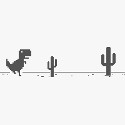
and Ronie Dinosaur is walking.