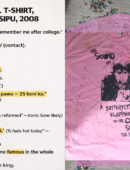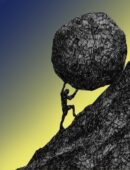












 ABOUT THE POEM: Spine of Barren Soil is a raw, masculine meditation on scarcity, endurance, and the forging of self under pressure. The song positions the speaker as a man who has stripped away social illusions—money, applause, borrowed status—and built identity through persistent labor, hunger, and unflinching self-discipline. The spoken interlude immediately establishes a dual focus: relational intelligence and equality. The speaker observes a woman’s agency, highlighting that equality is measured in giving, not taking. This sets a tone of quiet authority—he does not demand, he observes. It frames the masculine ethos of the piece: restraint, respect, and acknowledgment of real cost. Verse 1 and Pre-Chorus document the speaker’s physical and existential struggle: repeated pushups, squats, controlled rations, and relentless daily repetition. The narrative emphasizes discipline as the forge of identity, turning scarcity into moral and physical backbone. Hunger is literal and metaphorical—it represents the pressure that refines the man, shaping him through deprivation rather than comfort. The chorus repeatedly asserts the outcome: respect is earned, masks are discarded, and blame is internalized rather than outsourced. This aligns with your overarching philosophical theme: masculinity as upright presence under cost, not performative dominance. “I walk forward—still moving on” closes each chorus with motion and continuity rather than triumph, highlighting endurance over resolution. Verse 2 moves the setting to rehab halls, metaphorically linking physical training to spiritual and moral solitude. Crowds and applause vanish; only discipline and integrity remain. This contrast reinforces that external validation is fleeting—only internal rigor survives. The bridge crystallizes the ethic of uncompromising truth. It separates the man who can endure from those who cannot: to stand stripped and unadorned is both challenge and credential. The final chorus expands relational philosophy. Love and equality are real only when reciprocity exists without coercion. The speaker offers support (“I’ll cheer your flight”) without control, defining relational maturity as freedom and respect rather than possession. The imagery of a “soul in woman’s flesh” underscores authenticity, rawness, and mutual recognition.
Ronie Dinosaur’s Song – Spine of Barren Soil
Spoken Interlude (Insight)
(Music drops to a sparse beat. Voice close, raw.)
She never says “don’t go” out loud-
she calls you close, then holds you without a word.
A man doesn’t summon.
When a woman is truly his, she arrives on her own.
She can give all night
and still whisper, “Now it’s my turn.”
That’s where most shatter equality.
Equality isn’t measured by what you take-
it reveals itself in what you give.
(Beat swells back in.)
Verse 1
Beyond money’s chains and ego’s hollow crown,
I wore the same black denim—unwashed—
for one hundred sixty-seven days.
Seven hundred fifty-eight days total in that formal maze:
Knuckles bleeding stone, fifteen hundred pushups deep,
Three thousand squats, built gradually as nights dragged long.
A potato sliver weighed like cashew gold.
Four hundred grams of wheat and rice—
Hunger kept the ledger, priced my life.
Pre-Chorus
No applause, no borrowed name.
Hunger carved the counts: days, grams, reps-my frame.
Chorus
I found my spine in barren soil,
Respect earned in silent, relentless toil.
I fall, I rise-no mask, no plea,
This is the man isolation forced me to be.
If equality’s your word, then give, don’t claim-
Stand upright, never outsource blame.
I’m not chasing dreams that rot by dawn;
I walk forward-still moving on.
Verse 2
In rehab halls stripped bare to bone,
I learned how far a man can walk alone.
Crowds once cheered while money flowed,
Then vanished when the river slowed.
But there, in measured grain and iron will,
Respect arrived-no bargain, no bill.
Each day my spine drove deeper still-
Roots cracking stone where no rain ever fell.
Seven hundred fifty-eight days total—
one hundred sixty-seven in unwashed black—
time didn’t save me, it only told.
Pre-Chorus
No market price, no curated face.
Just earned ground, just steady pace.
Chorus
I found my spine in barren soil,
Respect earned in silent, relentless toil.
I fall, I rise-no mask, no plea,
This is the man isolation forced me to be.
If equality’s your word, then give, don’t claim-
Stand upright, never outsource blame.
I’m not chasing dreams that rot by dawn;
I walk forward-still moving on.
Bridge
I won’t trade depth for comfort’s lie,
Won’t soften truth so it slips quietly by.
If you can stand here, stripped and unadorned,
You’re already walking this hardened ground.
Final Chorus (Slower, Resolute)
I offer sky, not a cage of need-
A place where words and actions finally agree.
I’ll cheer your flight, won’t pull you near,
Only meet you where the ground is clear.
No towers, no fantasies dressed as care-
A soul in woman’s flesh: real, raw, standing bare.
I thrive in truth, in hunger, in fight.
Ronie keeps walking into the night.