 ABOUT THE POEM:
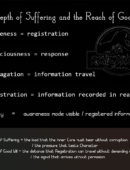
 This poem reframes Dylan Thomas’s famous exhortation—“Do not go gentle into that good night”—through the lens of First-Order Truth, a worldview that rejects metaphysical consolation and emotional bargaining in favor of constraint-based reality. Where Thomas urges rage as an emotional defiance of death, this version insists that rage must be informed, measured, and accurate. Emotion is not dismissed; it is disciplined. The central metaphor is not symbolic but operational. Fuel is literal. It is finite, counted, and irreversible. Space is not romanticized as transcendence but rendered as a closed system governed by immutable laws. There are no gas stations, no miracles, no divine interventions waiting beyond the horizon. This is not cynicism—it is engineering logic applied to existence. The poem argues that reality does not negotiate. Numbers do not respond to prayer. Physics does not reward sincerity or suffering. The universe is not cruel, nor kind; it is indifferent and precise. Within this framework, hope becomes irrelevant unless it translates into action within constraints. Rage, therefore, is only meaningful when paired with clarity. Blind defiance is theatrical; informed defiance is ethical. A crucial distinction emerges here: this is not nihilism. Nihilism collapses meaning when illusion is removed. First-Order Truth rebuilds meaning after illusion is stripped away. Agency remains, but it is grounded. You cannot extend the fuel, but you can choose how to burn it. You cannot escape entropy, but you can decide whether your thrust is wasted or deliberate. The repeated insistence on “measured might” reflects a philosophical refusal of excess—no tantrums, no pleading, no false optimism. Even rage must obey conservation laws. This positions the poem firmly within a modern, scientific worldview: one shared by astronauts, engineers, surgeons, pilots, and anyone operating where mistakes are final and excuses irrelevant. The absence of God in the poem is not antagonistic; it is incidental. Divine silence is treated the same way as empty space: not hostile, simply unresponsive. Meaning does not arrive externally. It is manufactured internally through stance, accuracy, and acceptance of limits. Ultimately, the poem speaks to people living in a modern world where precision replaces prayer, where responsibility cannot be outsourced, and where dignity comes from facing the dark without pretend. It does not promise salvation. It promises coherence. And in a universe that will not negotiate, coherence is the highest form of courage.
Title – Do Not Go Gentle into That Good Night (First-Order Truth)
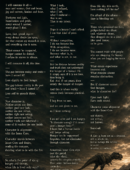
Rage, rage against the dying of the light-
but know the fuel is finite, measured tight.
No station waits beyond the black expanse,
no hidden grace, no last-minute advance.
The tanks read low; the numbers do not lie.
Reality will not negotiate the sky.
No plea refills the void; no tantrum bends
the silent laws that govern how it ends.
Do not go gentle-rage with open eyes.
Accept the orbit; reckon well the price.
Burn bright and true while thrust remains to spend,
then face the dark without pretend.
Rage, rage against the dying of the light-
yet rage with clarity, with measured might.
First-Order Truth demands we see it plain:
what is, is; what isn’t, won’t remain.
No god will answer; no miracle ignite
the empty tanks we carry through the night.
So burn the fuel you have-precise and bold-
and meet the silence neither hot nor cold.