ABOUT THE POEM: Why Live? is a distilled meditation on existence, autonomy, and moral accountability, functioning both as a philosophical treatise and a poetic exploration. Its structural premise revolves around a procedural sequence: individuals move from motion to experience, experience to awareness, awareness to thought, thought to information, information to knowledge, and knowledge to wisdom. This sequence, culminating in disciplined motion, presents life as a deliberate, observable, and self-monitored process. Each stage emphasizes honest self-examination, creating a chain of internal accountability that replaces traditional moral or cosmic oversight. The poem asserts that life does not offer inherent meaning or external validation; instead, meaning is generated through disciplined engagement with one’s own actions. The repeated imperatives—bring it yourself, cook it yourself, eat it yourself—anchor abstract philosophy in concrete, quotidian labor. By grounding existential concepts in tangible tasks, the poem conveys the weight of personal responsibility. Actions are not symbolic gestures but ethical exercises: each step is performed alone, without applause, witness, or servant. These actions reinforce the poem’s insistence on self-reliance, reflecting a worldview where existential and ethical clarity emerges from persistent engagement rather than external guidance or reassurance. The closing instruction—do it alone, do it cleanly, do it again—functions as both conclusion and recursive loop, highlighting life as continuous practice rather than a narrative or teleological journey. The poem extends beyond procedural meditation by incorporating social observation. Lines noting sunshine wasted in kitchens, buses, office queues, and screens situate personal practice within broader cultural phenomena. These observations critique the widespread human tendency to outsource meaning—trading freedom for companionship or companionship for freedom. Unlike Pressure, which abstracts existence into thermodynamic and architectural metaphor, Why Live? ties existential reflection to lived experience and social reality. The tension between solitary responsibility and societal distraction reinforces the poem’s central theme: one cannot live authentically through others’ definitions of purpose. Formally, the poem balances minimalist instruction with reflective expansion. Short, declarative lines convey procedural rigor, while the midsection introduces narrative-like reflection and ethical insight. The tone is austere but not sterile; it commands authority while maintaining philosophical clarity. Repetition—both of imperative phrasing and conceptual structure—produces meditative rhythm, reinforcing endurance, reflection, and habituation as central virtues. In sum, Why Live? is a modernist, existentialist exploration of autonomy, obligation, and the disciplined construction of meaning. It occupies a unique space between poetic austerity and practical philosophy, presenting life as a system of recursive action governed by honest self-examination. It is a manual for autonomous existence, a reflection on freedom, and a guide for living ethically without external sanction or metaphysical reassurance. Its strength lies in its ability to translate abstract philosophical rigor into procedural, lived practice while maintaining austere literary control.
Why Live?
Bring it yourself, cook it yourself, eat it yourself, praise it yourself, wash up, then go to sleep.
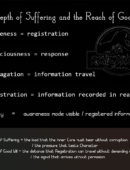
Motion flows to experience, experience to awareness, awareness to thought, thought to information, information to knowledge, knowledge to wisdom— wisdom, self-obligation after examination— then disciplined motion.
Each stage demands honesty, each stage permits obligation.
This is the cycle. No servant. No witness. No applause.
The question rises: “Why live?” No cosmic voice replies— only quiet command:
When you login first time using a Social Login button, we collect your account public profile information shared by Social Login provider, based on your privacy settings. We also get your email address to automatically create an account for you in our website. Once your account is created, you'll be logged-in to this account.
DisagreeAgree
Connect with
I allow to create an account
When you login first time using a Social Login button, we collect your account public profile information shared by Social Login provider, based on your privacy settings. We also get your email address to automatically create an account for you in our website. Once your account is created, you'll be logged-in to this account.











 ABOUT THE POEM: Why Live? is a distilled meditation on existence, autonomy, and moral accountability, functioning both as a philosophical treatise and a poetic exploration. Its structural premise revolves around a procedural sequence: individuals move from motion to experience, experience to awareness, awareness to thought, thought to information, information to knowledge, and knowledge to wisdom. This sequence, culminating in disciplined motion, presents life as a deliberate, observable, and self-monitored process. Each stage emphasizes honest self-examination, creating a chain of internal accountability that replaces traditional moral or cosmic oversight. The poem asserts that life does not offer inherent meaning or external validation; instead, meaning is generated through disciplined engagement with one’s own actions. The repeated imperatives—bring it yourself, cook it yourself, eat it yourself—anchor abstract philosophy in concrete, quotidian labor. By grounding existential concepts in tangible tasks, the poem conveys the weight of personal responsibility. Actions are not symbolic gestures but ethical exercises: each step is performed alone, without applause, witness, or servant. These actions reinforce the poem’s insistence on self-reliance, reflecting a worldview where existential and ethical clarity emerges from persistent engagement rather than external guidance or reassurance. The closing instruction—do it alone, do it cleanly, do it again—functions as both conclusion and recursive loop, highlighting life as continuous practice rather than a narrative or teleological journey. The poem extends beyond procedural meditation by incorporating social observation. Lines noting sunshine wasted in kitchens, buses, office queues, and screens situate personal practice within broader cultural phenomena. These observations critique the widespread human tendency to outsource meaning—trading freedom for companionship or companionship for freedom. Unlike Pressure, which abstracts existence into thermodynamic and architectural metaphor, Why Live? ties existential reflection to lived experience and social reality. The tension between solitary responsibility and societal distraction reinforces the poem’s central theme: one cannot live authentically through others’ definitions of purpose. Formally, the poem balances minimalist instruction with reflective expansion. Short, declarative lines convey procedural rigor, while the midsection introduces narrative-like reflection and ethical insight. The tone is austere but not sterile; it commands authority while maintaining philosophical clarity. Repetition—both of imperative phrasing and conceptual structure—produces meditative rhythm, reinforcing endurance, reflection, and habituation as central virtues. In sum, Why Live? is a modernist, existentialist exploration of autonomy, obligation, and the disciplined construction of meaning. It occupies a unique space between poetic austerity and practical philosophy, presenting life as a system of recursive action governed by honest self-examination. It is a manual for autonomous existence, a reflection on freedom, and a guide for living ethically without external sanction or metaphysical reassurance. Its strength lies in its ability to translate abstract philosophical rigor into procedural, lived practice while maintaining austere literary control.