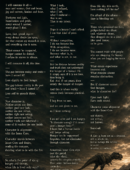
 ABOUT THE POEM:
 “First-Order Truth Is a Process” positions itself as a philosophical declaration rather than a confessional poem. It does not seek empathy, absolution, or aesthetic consolation. Instead, it articulates a method for living after the collapse of inherited meaning systems. By explicitly referencing Notes from Underground, the text situates itself in direct dialogue with Dostoevsky while refusing to remain within his psychological enclosure. Where Dostoevsky exposes the paralysis of excessive consciousness, this work documents what continues to function after that paralysis is acknowledged and survived. The central distinction of the piece lies in its rejection of collapse as destiny and consolation as necessity. Ronie Dinosaur is presented not as a symbolic persona seeking identity, but as a figure defined by movement and discipline. The repeated emphasis on walking, footsteps, and lifting weight grounds thought in physical action. Thought is no longer recursive or evasive; it is load-bearing. This marks a shift from introspective despair toward embodied persistence. The phrase “operating system that runs after the collapse” reframes existential inquiry as procedural rather than interpretive. Truth, in this framework, is not a belief to be adopted or defended, but a pattern of behavior sustained under conditions where hope, justice, reward, and metaphysical guarantees are absent. This aligns the work with a post-illusionary ethic: one that accepts the finality of certain losses without converting them into nihilism or romantic suffering. Discipline functions here as the core stabilizing force. Unlike hope, which depends on future outcomes, discipline operates entirely in the present. It does not require belief in progress, only repetition. The proverb about the rope carving stone reinforces this logic: wisdom and transformation arise not from brilliance or revelation, but from sustained contact with reality over time. Even “dull minds” grow wise through practice, suggesting that truth is accessible through endurance rather than exceptional insight. The closing admonition-“Do not mistake identity for character, or corruption for movement”-serves as both ethical boundary and interpretive key. Identity is framed as static, declarative, and often rewarded, while character is dynamic, tested, and largely invisible. Similarly, motion without direction-noise, agitation, performative struggle-is exposed as corruption rather than progress. This final warning ensures the piece cannot be misread as self-branding or performative stoicism. Overall, “First-Order Truth Is a Process” articulates a philosophy of continuation. It neither redeems suffering nor aestheticizes it. It accepts collapse as real and irreversible, then asks a narrower, harder question: What still runs? The answer is not belief, narrative, or meaning, but disciplined action sustained without promise. In that sense, the work is less about despair than about maintenance-about how a human being remains structurally intact when nothing external guarantees that they should.
First-Order Truth Is a Process
Dostoevsky captures the collapse in Notes from Underground.
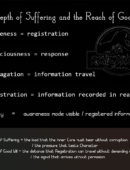
I am documenting the operating system that runs after the collapse.
Ronie Dinosaur walks with thoughts-
leaving literal footsteps on the ground.
That is a man who refused both collapse and consolation.
The Underground Man used thought to evade life.
I use discipline to sustain life without its promises.
This is what comes after the Underground:
when the lights never come back on-
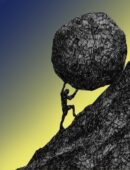
and I still lift the weight.
Through ceaseless practice,
even dull minds grow wise.
The rope, by coming and going,
carves its mark on stone likewise.
Do not mistake identity for character,
or corruption for movement.