 ABOUT THE POEM:
 I don't think NINETEENS is merely about love. It is about four irreducible hungers arriving at the same place. The title is deliberately plural because nineteen is not simply an age. It is every singular thing that comes only once and remains irrecoverable thereafter. One may experience many desires, many successes, and many relationships, but some hungers refuse replacement. The poem begins by confronting the commodification of love. Street food is not chosen accidentally. Peanuts, roasted chana, and samosas are inexpensive, momentary satisfactions consumed while moving elsewhere. They are forgotten because they are abundant. Love, however, is remembered precisely because it is scarce. Nineteen comes only once. The first hunger, therefore, is the hunger for love—not merely romantic love, but the hunger to be singularly known and singularly chosen. If love were infinitely replaceable, memory itself would become unnecessary. The second hunger emerges immediately afterward—the hunger for dignity. The poem asks what continuation costs when reality refuses to cooperate with truth. "Lose dignity to feed hunger" is neither advice nor resignation. It is an observation. There are moments when survival itself demands compromises one's younger self would have considered impossible. Hunger is not merely physical; it is existential. Consciousness learns that continuation is sometimes purchased with humiliation, rejection, and the surrender of idealized versions of oneself. The third hunger is thirst—the hunger for selfhood across time. Unlike hunger, which demands dignity as payment, thirst demands something more expensive. "Lose self to quench thirst." The poem deliberately distinguishes between the gap separating reality from truth and the gap separating reality in the past from truth. Time alters both questions and questioners. There are selves we cannot carry across decades of becoming. The thirst spoken of here is the longing to reconcile who one was with who one has become, knowing such reconciliation may require abandoning both versions entirely. The fourth hunger is companionship. It arrives quietly in the empty chair. Throughout the poem are preserved almosts—almost love, almost arrival, almost belonging. They are not presented as failures but as stained-glass panes through which consciousness continues to perceive beauty. The empty chair possesses the best view precisely because it remains empty. It is simultaneously the place reserved for a lover, a friend, nineteen itself, and every unanswered possibility that survives within memory. The anvil passage exists to unite all four hungers. The heart is not merely broken but reforged. Violence is immediately followed by tenderness. Dust is held gently before the eye. Destruction becomes instruction. By the time the poem asks, "Where are you?" it already knows the answer. The question survives not because of ignorance but because longing itself survives truth. The final line refuses both despair and consolation. Where are you? I ask this while I know the truth. Ronie Dinosaur is walking. NINETEENS is ultimately a poem about continuing to walk while carrying four hungers that time neither completely satisfies nor entirely erases. The question remains unanswered. The walking does not.
NINETEENS
People have mistaken love for a snack.
They exit one alley and pick up roasted peanuts,
walk a little further and grab the next peg with roasted chana,
reach the third quarter and, in the next lane,
take a crisp samosa with green chutney.
But nineteen comes only once.
If love were as easy to find as street food,
people would not remember it.
They would simply eat,
and forget.
My soul feels dishonored
lingering too long in this world.
My shadow murmurs:
Why haven’t you gone?
Even then—
it will be done.
Those with tadpole intent—
half-formed, fickle,
clawing at feelings too vast to grasp—
will never taste this irony.
Their egos veil
the silent forge of endurance.
It is the eternal bout
between hollow swagger
and unbreakable competence.
In a circus of self-crowned heroes,
I refuse the villain’s brand as well.
I reach the ridge, glance back—
as ever, no one behind,
no one ahead.
What now?
Only I remain
to issue the command.
Until my efforts rise as answers,
not reflexes.
Nothing has unfolded as I dreamed once in adolescence,
yet what must be done
will be done.
The gap between reality and truth—have I named it?
Lose dignity to feed hunger.
The gap between reality in the past and truth—have I named it?
Lose self to quench thirst.
In the cathedral I built each almost is a stained-glass pane—light pours through,
colours my loneliness beautiful,
and leaves me untouched.
First she broke my heart,
then laid the pieces on the anvil.
Bam. Bam. Bam.
She hammered them into powder and dust.
Then she grabbed a fistful,
held it at my eye level,
blew gently, and said:
“Look, son-of-a-bitch sweetheart-
that’s how it’s done.”
The empty chair beside me
has the best view of the world.
Where are you?
I ask this while I know the truth.
I have called myself a poor man for so long.
While you were there,
I could never show you why.
And though you knew,
you never came.
Perhaps that was always
the distance between us.
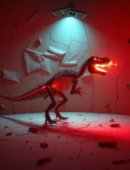
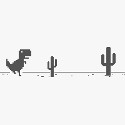
Ronie Dinosaur is walking.