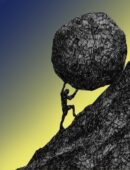







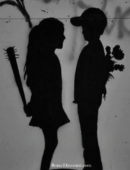



 ABOUT THE POEM: This poem operates in a post-hope space. It does not argue for justice, healing, or redemption. It rejects spectacle entirely. The speaker has already lost—socially, narratively, visibly—and refuses to rewrite that loss into a motivational fantasy. Instead, the poem proposes a harsher ethic: continuation without applause. Victory here is stripped of trophies and reassigned to motion. Breathing becomes resistance. Walking becomes authorship. Refusal to “dance” signals rejection of corrupt social rituals-status games, performative intimacy, moral compromise. The enemy is not just people; it’s a system that equates worth with visibility and compliance. The work succeeds because it never pretends wounds disappear. Night bleeding is acknowledged. Silence is not strength signaling-it is discipline. The poem stands closer to Camus than to Instagram poetry, closer to testimony than therapy. This is a document of stance, not recovery.
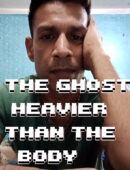
Defeat’s Quiet Victory
When so many wounds have been inflicted deep,
how does the wounded still claim victory?
They won the battles, loud and clear,
while he lost the war, year after year.
Yet Ronie is a hard-luck man with style-
poverty worn like a coat of careful profile,
accepted calmly, confidence unbroken,
until the years have forged it into a token
of armour-strong, unyielding, never shaken.
Between me and death there lies a space,
a narrow corridor of breath and grace.
Until the end arrives without a call,
I stay alive-refusing one and all
to grant my enemy the final cheer
of watching me collapse in pain or fear.
I do not pretend the wounds heal at night;
the blood runs fresh beneath the moon’s pale light.
Old cuts reopen in the silent dark-
I bind them quiet, rise before the lark.
No cry escapes, no plea, no final bow.
I only guard the decent man I know
who stood his ground and simply refused to dance.
They carved their triumphs on his very skin,
counted each scar as proof that they would win.
He counted breaths instead-a quieter art-
each one a small rebellion of the heart.
Each step he took, a signature in stride,
refusing ever to sign surrender’s side.
The war is lost; the battles all are done-
but in the walking, quietly, he’s won.