








 ABOUT THE POEM: This poem explores humiliation not as an act of cruelty but as an emergent property of desire. It begins with loss and exile-the speaker walking into the jungle-not to escape society, but to understand the mechanism of his own undoing. The jungle functions as a cognitive wilderness: a place where illusions die slowly. The central tension is between tenderness and biology. The poem insists that a bond can begin in innocence, even childlike mutual recognition, and still be destroyed the moment sexual hunger introduces asymmetry. Once desire appears, power enters. Once power enters, humiliation becomes possible-even without malice. Animal metaphors carry the argument. The pigeons represent pre-sexual affection: mutual, vulnerable, symmetrical. The cat is desire itself-silent, efficient, indifferent to meaning. This predator-prey logic is never moralized. No one is condemned. The poem refuses villains, framing both figures as organisms caught in evolutionary scripts they did not write. The philosophical movement of the poem is downward then clarifying. It strips away romance, then consolation, then blame. What remains is understanding. The final conceptual turn-psychology versus philosophy-does not resolve the pain but names the mismatch: impulse against structure, hunger against contemplation. What gives the poem weight is restraint. It does not plead, accuse, or sentimentalize. Humiliation is treated as a consequence, not a punishment. The speaker walks on-not healed, not redeemed-but aware. This is a poem about growing up too late, understanding too well, and paying the cost without theatrics.
Title – Why Did She Humiliate Me?
Why did she humiliate me so?
That heart-breaking woman laid me low.
To learn what happened, who he truly was,
he walked into the jungle, just because-
and lingered long in thought’s unyielding shade
until the world declared a thousand years had passed.
Just as they claim the titles, grand and bright-
artist, philosopher, Shiva’s might,
Ram, Buddha, saint, monk, messenger of light-
one day, after the same forsaken fight,
they’ll name themselves Ronie Dinosaur in turn,
when suffering’s path has made their spirits burn.
In her I saw how one may fail to know the core:
whether love springs from an authentic heart,
or only from the beauty others adore
and power it bestows at her command;
or whether she is merely timid still,
a shy soul draped in womanhood’s thin veil.
When you at last comprehend-as you must-
your character, your heart, your trust,
while living human in this male-born frame,
you’ll see why sorrow came, and why the flame
of perfect suit-woman and man-never meets.
If no sexual fire had burned between,
like one baby to another, soft and clean-
“I’m lucky to have met you”-pure, serene,
I’d rest content in her lap, she in mine.
But biology arrived, fierce and raw.
My erect desire could not grasp the flaw
in what we played-nor could she understand.
She craved to devour me, child in her hand,
while I longed to taste what seemed angelic, grand.
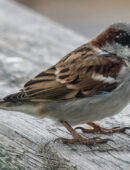
We were two pigeons, cooing, sweet and blind.
Then came the cat of desire, silent, sly.
We knew no better-thirst and hunger slew
the gentle birds; no fantasy flew.
Love did not linger; meaning hollow grew-
sex satisfied, yet empty through and through.
No villains here, no saints to praise or blame-
just organisms lost in hunger’s game,
mistaking thirst for love, or love for thirst,
in primal need forever cursed.
I am still walking-cooing turned to roar,
forever unmet, the jungle calling more.
Two pigeons billing in the morning light,
soft coos of babies newly met.
The shadow falls-the cat’s green eyes ignite.
Feathers scatter; innocence in debt-
and hunger wears the crown of regret.
The pigeons dreamed of nests at gentle dawn,
cooed promises no hunger could erase.
The cat’s soft paw undid what love had drawn-
feathers in wind, a vanished state of grace,
and regret alone inherits the empty space.
She is psychology-the restless shadow cast;
he is philosophy-the tree steadfast.
And just as in the union of flesh and fire,
there must be the athlete’s raw, unyielding drive,
so psychology’s fierce force meets philosophy’s divine.