 ABOUT THE POEM:
 "Fragments" opens with a direct refutation of classic literary grief. The speaker dismisses the sentiment of "better to have loved and lost," stating that their suffering is rooted in never having tasted the experience in the first place. The speaker’s life is experienced vicariously, like a "lunatic counting stars" they can never touch, or life scrolling past on an "empty feed." This immediately establishes the core pain of the speaker: exclusion from foundational human experiences. The chapter then uses sharp metaphors to define the speaker's paradoxical self-image. Are they the passive, accidentally beautiful "plastic bag from American Beauty," or are they the unacknowledged, dangerous force—the "storm the forecast never names," burning quietly while the world watches from a safe distance? This tension between passivity and inherent intensity defines the speaker as an "Outsider" and "Public enemy" simply for refusing to conform to the expectation of dying a "pretty" or compliant death. The theme of invisibility is chronicled across decades. In youth, the speaker was invisible because they were quiet and simple, while peers sought older, more complex partners. Now, the roles are reversed—the people the speaker desires seek "literal kids"—yet the outcome is the same: "Still simple. Still invisible." The stark conclusion: "no one ever liked me. Not once." This loneliness is a consistent, historical fact, which is why the "clock just laughs." The chapter introduces a complex analogy to the Hindu deity Shiva, the Destroyer. Shiva’s every step inevitably causes suffering (a crushed microbe, scattered sunlight). The speaker projects a universal experience of being burdened by unintended harm onto the deity, suggesting even the powerful are trapped by consequence. The critical takeaway is the shared necessity: "He must walk. I must walk." The speaker draws a sharp contrast between this walking, action-based reality and the passive intellectualism of "Academics," who only "dissect grandeur in lab rats" without ever becoming it. The final segments contrast the forgiving standard applied to conventional beauty with the merciless standard the speaker applies to themself. A girl's flaws ("wax in the eye’s corner," etc.) are excusable in the "game of beauty." However, the speaker’s self-worth is based on "perfect discipline and flawless continuity." For this self-imposed integrity, even the "slightest flaw cannot be forgiven, not even by himself." This discipline is the only thing the speaker truly possesses, as everything else "belonged to other people." The chapter concludes with the necessary, self-affirming command: "Ronie Dinosaur is walking," solidifying action as the ultimate measure of self-worth and rebellion against a life of fragments.
Ronie Dinosaur Chapter 21 – Fragments
People cry, quoting the classics:
“They had it, then lost it.”
“Better to have loved and lost…”
I say: it happened, alright-
I just never tasted it.
Only watched,
like a lunatic counting stars
he’ll never touch.
Life scrolls past
the way fingers swipe-
screen still glowing
on an empty feed.
Am I that plastic bag
from American Beauty,
dancing because someone
called it beautiful?
Or am I the storm
the forecast never names-
no red warning,
no shelter,
just burning quietly
in my own calm eye
while the world watches
from the safe side.
Fighting alone,
betting against myself
because everyone else already cashed out.
Outsider.
Outcast.
Public enemy
for refusing to die pretty.
Keep scrolling.
Back then
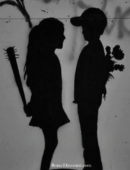
girls my age wanted older guys.
I was quiet. Simple. Invisible.
Now
the girls I want
want boys half my age-
literal kids.
I’m still quiet.
Still simple.
Still invisible.
All in all,
no one ever liked me.
Not once.
The clock just laughs.
Whenever Shiva takes a step,
something beneath his foot
will scream-
a microbe crushed,
sunlight scattered,
someone offended.
He will think:
Where do I go?
What do I do?
What the fuck is this sorcery?
Everyone has rights-
but not me.
Let it happen.
Free publicity.
Truth in motion.
He has no tail left-
only the trail.
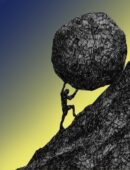
But he must walk.
I must walk.
Academics don’t become grand;
they dissect grandeur in lab rats
and call it understanding.
They’ll never be Shiva.
A girl thinks:
so many came preaching my beauty,
took what they wanted to heart,
and left.
She can still play the game of beauty-
wax in the eye’s corner come morning,
saliva at the mouth,
dress wedged in butt cheeks-
all excusable.
But the walk of someone whose worth
depends on perfect discipline
and flawless continuity:
even the slightest flaw
cannot be forgiven,
not even by himself.
If a filthy heart can’t keep beauty,
even dirty language can’t express it.
I was never offered anything.
They belonged to other people.
Ronie Dinosaur
is walking.






















[…] Ronie Dinosaur Chapter 21 – Fragments […]