 ABOUT THE POEM:
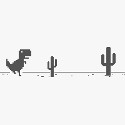
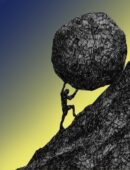
 “Stubborn” is not a poem of suffering; it is a poem of posture. The speaker does not narrate pain or explain injustice. Those elements exist only as background conditions, already settled, no longer debated. What matters here is not what happened, but what continues. The poem’s central claim is simple and severe: persistence itself is an ethical act. From the opening lines, the poem strips away every traditional support system. Courage, bravery, luck, and even character-normally the moral scaffolding of heroic narratives-are explicitly withdrawn. The world does not offer guidance, reward, or even clarity. What remains is the act of walking. This walking is not metaphorical wandering or hopeful journeying; it is disciplined continuation. Uprightness is posture, not pride. The absence of applause, witnesses, medals, or open arms is not lamented; it is accepted as a condition of reality. The poem rejects the modern demand for validation. Meaning is not produced by recognition but by adherence to a private standard. The footsteps echo only to confirm existence, not achievement. Their reply-“yes, yes, yes”-is cadence, not affirmation. It marks time like a metronome, enforcing rhythm rather than emotion. The concept of “stubborn dark” is crucial. Darkness here is not passive or dramatic; it resists resolution. It does not yield to insight or effort. By continuing to walk within it, the speaker does not defeat the dark but refuses to cooperate with its inertia. This reframes endurance as opposition. The silence returned to silence is deliberate, controlled, and symmetrical. The speaker does not cry out; he mirrors the world’s indifference with measured persistence. The “contract” renewed with every step is the poem’s philosophical core. Existence becomes procedural rather than narrative. There is no arc, no redemption, no revelation-only compliance with a self-imposed rule: remain standing, remain moving. This transforms walking into an ethical minimum, a baseline obligation that does not require belief, hope, or reward. Ending with the name “Ronie Dinosaur” risks self-mythology, but the final line dismantles that risk immediately. “I walk” refuses monumentality. It is not a conclusion but a status report. The poem ends exactly where it began: in motion. “Stubborn” belongs to a lineage of existential minimalism. Its strength lies in what it refuses: consolation, explanation, spectacle. It offers no solution to suffering and no theory of justice. Instead, it presents a single durable act that survives when all systems fail. The poem does not ask to be admired. It simply keeps going.
Ronie Dinosaur Chapter 115 – Stubborn
When courage, bravery, and luck surrender,
and even character offers no choice,
my spirit lifts the heart,
teaching it to feel alive-even in the stubborn dark.
I cling to the act of walking,
upright.
No applause waits at the end of this road:
no witness, no medal, no open arms.
Only the echo of my own footsteps,
refusing to lie down.
And that is enough.
The road keeps its promise of nothing;
I keep mine of everything.
No one will ever know
how heavy this lightness is.
Still, the footsteps answer back-
yes, yes, yes.
The dark keeps its ancient silence,
and I keep returning mine-
measured, deliberate, unbroken.
No one hears the contract renewed
with every step that says: still here.
I carry tomorrow on my back
like a debt I refuse to pay early.
The horizon stays silent;
I answer with another step-
and the silence learns my name.
I am Ronie Dinosaur.
I walk.















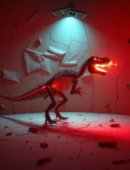
[…] Ronie Dinosaur Chapter 115 – Stubborn […]