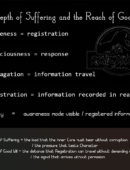












 ABOUT THE POEM: “The Formula” is a concise, assertive declaration of a pragmatic philosophy for achieving objectives in life. The poem argues that success is not found in luck or complex strategy, but in mastering a precise internal state. This state requires the triple foundation of emotional stability, sobriety, and a lack of fear of failure. This foundation leads to active common sense, which, in turn, is the only tool necessary for effective, tenacious bargaining that elicits true responses, not just fleeting reactions.
The formula is this: with emotional stability, sobriety, and no fear of failure, you develop a mindset rooted in active common sense. This mindset allows you to bargain effectively with your target until your objective is achieved.
Regarding the bargain itself – keep negotiating until your efforts are met with responses, not mere reactions. As I said earlier, use common sense.
The Manual of Self-Mastery and Strategic Interaction
The world does not reward hope. It does not reward desire. It rewards clarity, discipline, and strategy. What I have learned is simple, brutal, and rooted in both the human mind and the human condition.
Step One: Build the Mind
Emotional stability. Sobriety. No fear of failure.
Emotional Stability: Control what you can – your thoughts, impulses, reactions. Let neither desire, anger, nor ego dictate your actions. Psychology calls this emotional regulation; philosophy calls it virtue. Stoics say: some things are up to us, some things are not. Your emotions are under your control. Others’ behavior is not.
Sobriety / Clarity of Mind: Think clearly. See situations as they are, not as you wish them to be. Cognitive psychology teaches that clear attention, planning, and reasoning prevent mistakes. Mindfulness and reflection are your tools. Without them, negotiation and perception collapse under noise.
No Fear of Failure: Failure is feedback, not shame. Resilience and growth mindset – psychological truths – allow you to act boldly without paralysis. Fear is the enemy of action. Mistakes are teachers.
Together, these create a mind rooted in active common sense, the ability to assess reality accurately and act deliberately.
Step Two: Define the Target
Know exactly what you want from a person, a situation, or an interaction. Vagueness is weakness. Clarity is leverage. Without a clear target, negotiation becomes wandering; effort diffuses into frustration. Existentialism teaches that meaning is created through choice – define your goal, then act.
Step Three: Start the Bargain
Every interaction is a negotiation. Treat it as such. Not a battle of wills. Not a plea for sympathy. Present your intentions clearly. Observe every gesture, word, and pause.
Social psychology tells us that people give away more in subtle cues than in their spoken words. Distinguish reflexive reactions from deliberate responses. Act on responses. Ignore reactions.
Step Four: Demand Responses, Not Reactions
A reaction is automatic, superficial. A response is deliberate, thoughtful. Push your effort until engagement emerges. Stop investing energy where intelligence or will is absent. Rational action is wasted on reflex.
This is psychological leverage: focus your energy where it produces results.
This is philosophical clarity: do not be deceived by noise or illusion.
Step Five: Control Yourself, Not Others
You cannot bend hearts, minds, or desire. You cannot force honesty or affection. You can only control your own actions, strategy, and clarity. Stoicism teaches this. Rational pragmatism confirms it. Self-possession is the strongest leverage.
Step Six: Iterate Until Completion
Negotiation is a process. Test. Measure. Refine. Adjust. Stop only when your objective is met, or reality proves it unattainable. Learn from every failure. Accept the outcome without self-deception.
Step Seven: Accept the Brutal Truth
Nothing unfolds as imagined. People project, mislead, and lie – including you. The world is honest only in its transactions. Your task: operate within that honesty. Act with clarity, discipline, and strategy. Energy wasted on illusion is energy lost forever.
The Core Philosophy
This is not a formula for hope, for dreaming, or for morality. It is a manifesto of self-mastery and effective action.
Psychology provides the tools: emotional regulation, cognitive clarity, resilience.
Philosophy provides the lens: Stoic control, existential purpose, pragmatic action.
Together, they teach the truth: control yourself, define your target, demand engagement, act relentlessly.
The world humbles you. Life humiliates you. People disappoint. But with this framework, you are no longer blind. You see clearly. You act deliberately. You survive – and sometimes, you win.