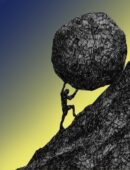












 ABOUT THE POEM: This piece is a non-linear autobiographical poem structured as psychological recall rather than chronological narrative. It documents a life shaped by rejection, institutional failure, self-punishment, and the persistent attempt to convert suffering into worth. The speaker returns repeatedly to the phrase “I came home without a degree,” which functions less as a factual statement and more as a symbolic verdict-an early sentence that never expires. Academic expulsion becomes the original fracture through which identity, friendship, love, and self-regard collapse. The poem resists redemption arcs. Instead, it traces cycles of endurance and withdrawal: working extreme hours, refusing physical comfort, submitting the body to heat and cold, and turning discipline into a form of self-directed violence. These acts are not presented as virtues, but as punishments imposed by the speaker on himself in response to perceived moral failure. Work becomes both refuge and prison. Survival replaces aspiration. The recurring images-the chair, the ledger, the rickshaw-serve as anchors of stasis. The chair represents immobility across time; the ledger symbolizes moral accounting without forgiveness; the rickshaw suggests motion without destination. Together, they form a system in which effort does not guarantee progress and suffering does not produce absolution. Love appears late and out of order, reflecting how unresolved trauma resurfaces unpredictably. Early rejection establishes a template: intimacy is equated with humiliation and loss. When genuine affection later arrives, the speaker abandons it preemptively, convinced that staying would require hope-a risk he refuses to take. The line “Even you can go” marks the moment where self-erasure overtakes attachment. Leaving becomes an assertion of control in a life otherwise governed by external judgment. The poem is grounded in an Indian socio-economic context-academic pressure, engineering as obligation, family responsibility, heat, labor-but it avoids sociological explanation. Instead, it focuses on interior consequences: how a person internalizes failure until punishment becomes identity. Money, when achieved, does not liberate; it merely postpones collapse. The final sections move from poetry toward declaration, intentionally exposing the tension between art and self-justification. This shift is not accidental. It reflects a speaker still arguing with an invisible court, still seeking a verdict that declares his life “not worthless.” The poem does not resolve this argument. It ends with absence: unseen, unfelt. Ultimately, this work is not about failure, but about the cost of surviving without mercy-for oneself or from the world. It stands as testimony rather than confession, refusing consolation and refusing closure.
I returned home without a degree.
Detained for attendance shortages—the rules were never clearly explained.
I lost my best friend to another lecture hall,
and my obligation to become an engineer to another timeline.
Earlier still, I lost my worth as the studious boy
when a schoolgirl rejected me for someone “different.”
In college, I became Ronie—
the angry young man, the chosen image.
That costume cost me one year.
The “bad boy” label stuck,
and attendance only shrank further.
One fight with my closest friend became permanent exile.
I came home without a degree.
Then July arrived—46 degrees of heat—
and for years I refused to switch on the fan.
Thirty-six-hour shifts, then eight hours of sleep.
Work-from-home became my prison.
In winter, I sat through the night on the same chair;
even closed doors could not stop the freezing air.
No gloves, no socks, no cap.
I cursed every sunbeam that dared touch my table.
Year after year, I punished myself brutally.
From the college rejection that shattered me
to earning substantial money over a decade,
I remained my own worst enemy.
The cruelest irony:
after finally climbing that ledger,
one year later I fell again—
hard.
In these twenty-seven years, I have lived three.
The first was my first year of college.
The second was the year I earned over two lakhs in a single month, twelve years ago.
The third came after losing to life for the fourth time,
when I went to hotel rooms
and spent everything that remained
after giving most of it to my parents.
The ledger never forgives the climber
who reaches the top only to remember
the mountain was always inside the room.
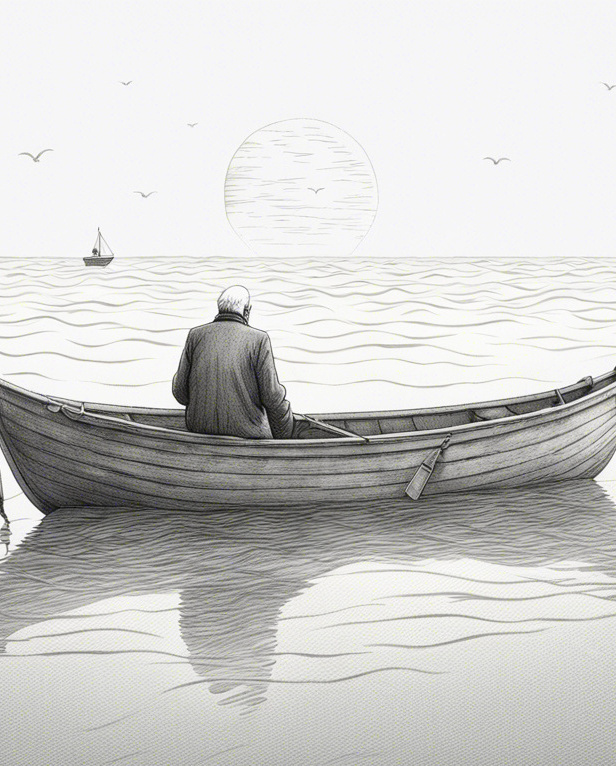
I still sit on the same chair—
now heavier with everything I refused to feel.
After school and nine months of depression, I ran—
as early as before 4 a.m.,
in July afternoons and rainy winter mornings—
saying inside my head
that that fucking girl broke my heart:
love at first sight,
rejected the same afternoon,
made a spectacle of in school.
For two years, I roamed the streets all day,
like local rickshaws that go nowhere.
Then I entered college and met a girl who loved me.
She kept a seat reserved for me in the lecture hall
when I was outside,
waiting until I came.
She waited.
We sat in empty classrooms,
holding hands for hours.
The only girl who ever loved me,
even if only a little,
without calculating consequences.
When we fought as she refused to be my girlfriend,
when I needed her the most,
I felt unvalued,
after detention, I screamed you go too.
I said it inside my head:
Even you can go.
As I was leaving her, I felt the weight of a train engine on my heart while walking away.
I was going into the nothingness of substance abuse for five years.
I have already lost everything.
I wanted no sight
other than to look into her eyes—
as I once did when I fell in love at first sight in school.
I wanted nothing
more than her presence around me,
the girl, my friend in college.
But I got nothing.
I left—
unseen,
unfelt.