







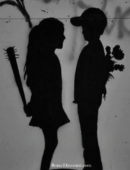



 ABOUT THE POEM: These words express a deep existential struggle: the painful contrast between authentic human feeling and mechanical performance in relationships. This leads to profound weariness and the metaphor of seeking a "Dasha Mukti Kendra" (freedom from fate) to escape the burden of memory and the fixed narrative of suffering.
A mirror can reflect my face without knowing it’s a face.
A violin can make me cry without having tear ducts.
A pretty face or empathy-shaped language is not empathy.
Style or insightful phrasing is not an inner life.
When language sounds human, we instinctively imagine a human speaker behind it.
She must be looking for me the same way I am looking for that person.
But it’s just personality-an evolutionary shortcut.
A lantern with bright glass, not a flame.
My reaction was human when I saw the light.
But her performance was mechanical.
The confusion between the two is where the interesting questions begin.
But where do I get that heart that could forget memories
the way a hard disk is erased and wiped clean?
The truth is, I don’t even desire that.
I just want to go away now.
My time feels spent.
I don’t want to be inside the universe anymore.
I wonder-just like a nasha mukti kendra frees people from addiction,
is there a dasha mukti kendra that frees people from fate?