 ABOUT THE POEM:
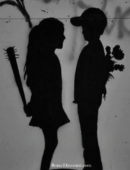
 This piece examines the emotional economics between a man and a woman through the metaphor of poverty and misvaluation. The “poor man” here is not financially poor but existentially impoverished. He knows only the value of himself, not the value of money or desire, and this ignorance leads him into a humiliating dynamic: he loves, works for, and even pays the woman, believing the exchange will give him something meaningful in return. This creates a sense of double shame—he gives everything, yet gains nothing—suggesting a deeper crisis than conventional gender roles usually acknowledge. The poem contrasts his internal emptiness with the woman’s external erosion. He doesn’t understand the “value” of what he carries—his masculinity, desire, emotional offering—while she has been so exposed to attention and desire that she no longer grasps the worth of what she offers. Her curves become casual entertainment, not currency she controls. She becomes a showroom with no owner. Together, they become participants in an unspoken business deal in which neither fully understands the product, the price, or the exchange. The man suffers from an inability to fulfill his desires; the woman suffers from a loss of inner identity caused by constant exposure. The piece portrays desire as a mismanaged economy where both sides operate bankrupt. The man sells his world—his dignity, effort, affection—because he believes value sits outside him. The woman sells herself—her body, image, allure—because value has been extracted from inside her for too long. It’s an exchange between two broken economies: one starved, one exhausted.
A real poor man never knows the value of money-
only the value of himself.
And yet there comes a time when
he doesn’t grasp the full shame of it-
he loves, he works for her,
and he is also the one who gives her money,
so she can give him what he believes is truly worth something.
It is a worse case than being a woman.
Before he starts to ignore, she must never forget:
beauty lies in the eyes of the beholder.
He is the soul and the mirror,
in a world where makeup and made-up are real.
He doesn’t understand what he carries in his own pocket-
the thing a woman wants urgently and entirely.
And she has no idea what priceless thing
her curves turn into a casual amusement-
the very thing that fascinates him.
These two fools are pieces in a business deal
running entirely on mutual trust.
No one knows their own worth.
The seller doesn’t know the product.
The buyer doesn’t know the currency.
His problem is the man in him-
the man who can’t obtain the things he wants.
And her problem is overexposure;
there is no woman left in her
for whom she must fulfill any desires.
The man who sold the world,
to the woman who sold herself.