 ABOUT THE POEM:
 Chapter 46 marks a decisive tonal and philosophical shift in the book. Where earlier chapters dissected meaning, karma, character, and recognition with surgical intensity, Reverification abandons analysis as the primary mode. This chapter is not an argument; it is a procedural declaration. The speaker no longer seeks confirmation through thought, narrative, or metaphysical framing. The inquiry into “why” has exhausted itself. What remains is a demand for verification through action alone. The opening insistence on blankness is not emptiness as despair, but emptiness as cleared ground. Mind blank. Body blank. Experience stripped of interpretation. This is the logical endpoint of the book’s earlier eliminations: when meaning, justice, cosmic order, and even recognition have been dismantled, what survives is a system that must now test itself in reality. The blank page is not a failure to write; it is the refusal to fabricate. The rejection of traditional markers—strength, intelligence, money, status—continues the book’s long-standing refusal of social validation. The line about love is not bitterness masquerading as insight; it is an empirical conclusion drawn without ornament. This chapter refuses consolation, romance, or symbolic compensation. “That’s enough” functions as a boundary, not a lament. The declaration “I am a self-contained system” crystallizes the work’s central thesis. The self no longer negotiates with witnesses, mirrors, or metaphysical audiences. Verification will not come from reflection but from friction—with work, with training, with time. This is a pivot from epistemology to mechanics. Knowing is replaced by doing; thought is subordinated to practice. The new rule—action over thought, practice over understanding—is not anti-intellectual. It is post-interpretive. Thought has already done its maximum work in previous chapters. What follows is calibration: seeing whether the structure holds under load. The invitation to “roll the dice” does not contradict earlier rejections of fate; it signals willingness to engage with uncertainty without narrativizing it. The reference to the Ashwamedha yajna is intentionally paradoxical. Traditionally a ritual of sovereignty and cosmic sanction, it is reimagined here as defiant, almost absurd physical assertion—“hurling a rock straight into the sky.” The gesture rejects sacred permission while retaining symbolic audacity. Meaning is not asked for; it is challenged. The closing directives—Live. Train. Work. Observe.—read like operational code. Silence is no longer absence but a collaborator. The final lines, “Touch me. Reach me. Let me know,” do not plead for recognition. They establish conditions: contact must be real, physical, undeniable. If something is to be known now, it must be encountered. As a chapter, Reverification functions as the book’s transition from philosophy to embodiment. It does not conclude the journey; it changes the method. After this point, the walk continues without commentary. The book no longer asks the universe a question. It steps forward and waits to see what resists.
Ronie Dinosaur Chapter 46 – Reverification
My life is a blank sheet-
and it has remained blank.
Mind blank.
Body blank.
Everything experience once seemed to teach me
turns out plain, simple, blank.
Strength, intelligence, money, status-
none ever won a body for me.
That’s enough.
I’m done waiting.
No witness needed-I’ve learned that much.
No mirror required.
I am a self-contained system.
From now on, I verify by a new rule:
action over thought,
practice over understanding.
Roll the dice.
I’m in the game.
I’ve learned nearly everything required to keep walking.
Let’s perform something like the Ashwamedha yajna-
something grand, defiant,
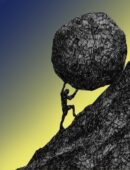
like hurling a rock straight into the sky.
I am Ronie Dinosaur.
Live. Train. Work. Observe.
Let silence do its part.
Touch me.
Reach me.
Let me know.






















[…] Ronie Dinosaur Chapter 46 – Reverification […]