 ABOUT THE POEM:
 Four Falls, Four Walks is a meditation on what remains after repeated collapse, not as a story of recovery but as a study of stance. The poem rejects the common narrative arc of fall–lesson–redemption and instead presents falling as a permanent condition that reshapes how time, effort, and identity are experienced. The speaker positions himself alongside a seventy-year-old man at life’s edge, not to exaggerate suffering but to establish an early familiarity with endings. This comparison frames the rest of the poem: the realization that some people encounter emotional finality long before life officially begins. At seventeen, the speaker experiences the same existential compression usually reserved for old age—panic, displacement, and the certainty that effort alone cannot repair certain losses. Time in this poem does not heal; it clarifies. Birthdays lose their significance, numbers detach from meaning, and aging becomes an act of learning what deserves memory and what must be discarded. Rather than accumulating identity through milestones, the speaker refines himself by subtraction. The recurring act of walking functions as both necessity and refusal. It is not progress toward a destination, nor is it symbolic optimism. Walking is what remains when hope is stripped away—movement without promise, sustained by habit and carried with personal style. Style here is not aesthetic performance but dignity under constraint. The poem deliberately distances itself from consolation. It refuses pity, shared rage, or moral validation. The speaker does not seek to be followed, understood, or saved. Instead, he asserts ownership over how he carries himself in a world that may deny him fulfillment but cannot confiscate posture. In a cultural landscape dominated by therapeutic language and redemptive arcs, Four Falls, Four Walks offers a colder, more exact alternative: survival without bargaining, endurance without illusion, and movement without applause. It is not a manual for happiness, nor a confession of grief, but a declaration of how one continues when continuation itself becomes the only honest act.
Title – Four Falls, Four Walks
Just like a seventy year old man at the end of his days-
quiet, worn out, defeated, yet still willing to live-
there is something left in him.
Perhaps he wants a second chance,
but he no longer has the energy for it.
I compare myself to seventeen-
I used to wake panicked
in the middle of the night,
bolting out of bed in frustration-
sweaty forehead, panting-
feeling the world had moved on
and I had been left behind.
I was like a cornered dog-
ready to defend, ready to fight.
I already knew disappointment,
and the helpless truth
that nothing could be done about it.
It was the same feeling as an old man
who cannot live again-
no life left, only the logical turn of events:
he is going to die.
I have lived that life ever since.
I stopped counting birthdays long ago.
I aged not without numbers,
but without the significance of them-
what to forget,
and what to remember.
And that’s where I learned:
I walk alone out of habit and style.
The world may be going to a happy place.
I am going somewhere else.
A life that knows it must struggle all its life,
and that there is nothing waiting for it,
requires a different level of courage.
It must be monumental.
The world may not give me what I want,
but it cannot take away
how I carry myself.
I don’t want your pity.
You would not know what to do with this rage.
Go your own way.
Let me go.
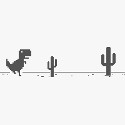
And Ronie Dinosaur walks.