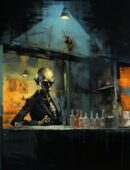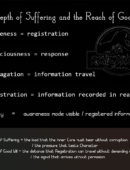












 ABOUT THE POEM: This piece speaks from a position of self-command, not grievance. The speaker rejects worship, validation, and rescue, identifying jealousy as an external force projected by others who fixate, depend, and then retaliate when salvation is refused. “Snakes” are born from envy that turns inward and poisons itself. Their presence becomes a mirror—useful, controlled, and disciplinary—while solitude is framed as freedom rather than lack. The poem documents temperature control over rage, posture over possession, and independence over approval.
Title – Jealousy of Snakes
I neither beg nor brag,
nor hope,
nor pray,
nor dream-
I am a godless being.
To conceal, to deceive,
to wound without remorse-
that is your chosen art.
I have wronged no one,
yet your jealousy convicts me.
What the serpents do is not redemption;
they savor the slow burn of their own envy.
From the ashes you leave,
I forge colder steel.
No altar, no plea-
only the silence I keep.
Your venom is tribute;
I drink it like wine.
Let them hiss of my sins;
I was never divine.
I walk on, unblessed,
and the night walks with me.
Winning over me
by offering less
will not crown you grand.
You will still carry
that old childhood wound-
the one you never commanded.
What you do to me
is this: first plead for rescue;
then, when I refuse to bleed, fight me;
then exact revenge
for the failure you demanded of me.
In time, even trauma dulls its blade
against the edge I have become.
We both remain unbroken-
only colder.
We shall all burn in envy,
in jealousy,
and we will all win,
except you.
Yet I wonder what I truly have
that you lack.
Not riches. Not power.
Only character.
Only posture.
Only stance.
I stand at the center, unconsumed,
counting the degrees of your heat.
That is how snakes are born:
from envy that fixates, then poisons itself.
You came by your own intent,
seeking a savior you could blame;
now you cannot leave.
I turn your captivity to my favor-
a living mirror
that keeps me disciplined,
sharp,
unyielding.
They still believe
my solitude-
no woman, no companion at my side-
gives me license to envy them.
But as I have said,
the truth is the opposite:
your jealousy is the chain
that consumes years of your life,
turning you into a slave of your own desire,
while I remain free.