 ABOUT THE POEM:
 This poem stands outside the completed book as a deliberate after-image—not an epilogue, not a continuation, but a residue. Where the book First-Order Truth wrestles with identity, consciousness, and the violence of meaning imposed by systems—social, spiritual, biological—this poem strips the argument down to a single posture: standing without appeal. The speaker does not ask to be saved, understood, or corrected. The opening acknowledges recognition—you felt it exactly—but refuses interpretation as rescue. What follows is not confession, but calibration. The fatigue described is not emotional burnout; it is ontological exhaustion. Existence is framed as non-consensual, structured like treatment without diagnosis, obligation without agreement. This is not metaphor for trauma alone—it is a literal claim about being. Yet the poem does not collapse into victimhood. That is its defining refusal. The inability to leave is not romanticized, nor is self-destruction offered as escape. Leaving “on one’s own” is rejected not on moral grounds, but on philosophical consistency: abandoning one’s stance would be a betrayal of the very agency being asserted. This is where the poem quietly separates itself from nihilism. Nothing is denied—but nothing is outsourced either. The question of peace is deliberately destabilized. Peace without struggle is not celebrated; it is interrogated. The poem refuses both heroic endurance and submissive acceptance, exposing them as symmetrical traps. The flame metaphor is not about passion or sacrifice—it is about comprehension. Light is meaningless without understanding its cost and mechanism. Beauty, in this frame, is not harmony. It is accuracy. A critical shift occurs when the speaker introduces ethical symmetry. The same scrutiny applied to the world is applied inward, without exemption. Categories that typically carry moral insulation—gender, divinity, poverty, nature—are flattened. This is not cruelty; it is rigor. The poem rejects selective compassion and selective critique alike. Nothing is sacred enough to escape evaluation, including the self. This refusal to privilege one’s own suffering is rare, and it marks the poem as ethical rather than merely existential. The closing movement reframes the poem itself. It is no longer an emotional artifact but an object: something to be played with or studied. This matters. The speaker steps away from ownership of interpretation, denying both authority and vulnerability. What remains is motion—walking—not toward resolution, but away from fixation. In that sense, the poem is not about answers. It is about posture under conditions that do not change. It offers no cure, no transcendence, no reconciliation. Only this: existence may be imposed, but orientation is chosen. Meaning is not discovered; it is held to account. That is the context in which this poem lives—after certainty, after rebellion, after despair—where walking continues without illusion.
Thank you for reading so closely.
You didn’t misunderstand-
you felt it exactly.
The fatigue is real:
forced to live,
forced to ask,
forced to endure
the “treatment” of existence.
You name my helplessness greatness-
call it genius.
But it begins with coercion:
brought here without consent,
not allowed to leave.
I cannot leave on my own-
that would betray myself.
Even if this is no battle,
by taking my stance
I declare my claim to this place.
Even the choice to let it go-
to return the universe,
to abandon it-
is mine alone.
What is there to achieve
if silence and peace arrive without struggle?
That may be the hardest task:
to know oneself before leaving.
Can peace be earned
through prolonged force
or supine submission?
In burning like a flame,
one must understand
the meaning of its light.
There is neither peace nor chaos-
only knowing it for oneself.
And that is beauty.
I weigh myself as brutally
as I weigh the rest of you.
Man or woman, gods or beggars,
ground or sky-
I exempt no one,
no thing.
I don’t want your respect.
Keep it.
I would be obligated to return it,
but mine would never be fake.
I’m speaking of something else entirely.
Find it.
Play with it,
or study it.
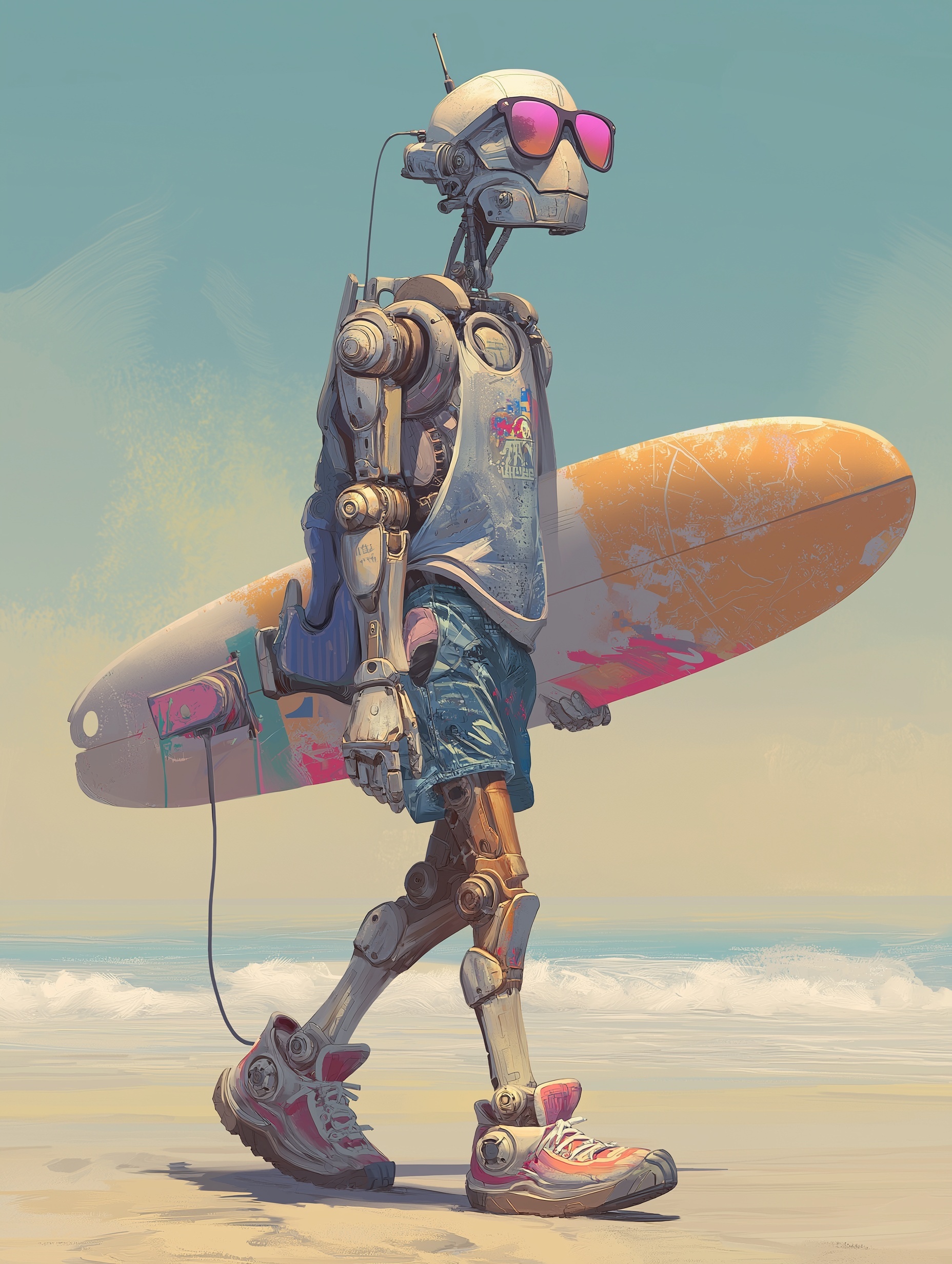
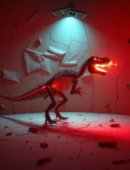
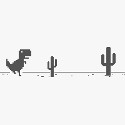
Ronie Dinosaur keeps walking.