









 ABOUT THE POEM: Context and Analysis: The Anatomy of a Soulful Starvation Chapter 127 of the Ronie Dinosaur saga represents the ultimate collision between two irreconcilable worldviews: the Transactional (The Merchant’s Scale) and the Existential (First-Order Truth). In this chapter, the narrator-the "Philosopher-Athlete"-faces a test of power that reveals the tragic gap between sexual desire and spiritual recognition. 1. The Conflict of Power The woman in the poem views power through a traditional, almost predatory lens. To her, a "powerful man" is one who accepts a challenge and "takes" what is offered. She offers her surrender as a trophy, expecting the narrator to act as the "Hunter." However, the narrator’s definition of power is Restraint. To him, the ultimate power is the ability to hold a furnace of desire behind "steady hands" to ensure the sanctity of the moment. He refuses to "eat with dirty hands"-a metaphor for engaging in intimacy that lacks the "clean" foundation of mutual, recognized intent. 2. The Distinction: Submission vs. Surrender This chapter offers a profound psychological distinction between these two states. Surrender is described as a loss of agency-the "body melting, the will already gone." It is an animalistic, reflexive state. Submission, in Ronie’s vocabulary, is an act of high consciousness. It is a "quiet yes that waits." By being "submissive" to her presence on the stairs, he was granting her the freedom to exist as a person, not just a target. Ironically, she interpreted his lack of aggression as a lack of interest. She "fought him for not exploiting her," unable to grasp that his restraint was the highest form of respect he could offer. 3. The Invisible Murder The "silencer on the gun" is one of the most poignant metaphors in the manuscript. It describes the "social death" that occurs when a man’s integrity is misinterpreted as failure. She "killed" their potential by labeling him as someone who "only wanted flesh," or worse, someone who was too weak to take it. Because she used a "silencer"-the quiet weapon of social rejection and cold silence-no one in the college or the world noticed that a man of profound character had been destroyed by a misunderstanding. 4. The Visual Soul The concluding lines provide the philosophical "why" behind the narrator's actions. "The soul needs a picture to think." This suggests that for Ronie, love is a visionary act. You can perform the physical act of "making love" in the dark, but the process of "falling" requires a witness. It requires the eyes to be open to the "Original Character" of the other. By refusing the "feast without a name," Ronie chose Starvation over Illusion. He would rather be the "loser" with zero success than the "hunter" who wins a body but loses the soul. In the end, his character is defined by the "Empty Chair"-a seat kept vacant because no one else was willing to open their eyes and see the "picture" he was trying to paint.
Ronie Dinosaur Chapter 127 – What Is Love?
A seat in the university lecture hall
always saved for me-
her Ronie, the only one allowed to sit.
She would wait in the room,
never calling, never texting,
but the moment I arrived
she showered me with love:
“Ronie, come sit here.”
That was all I wanted.
That was the only reason I came to class.
Yet when the lecture ended
she became someone else-
leading me to a secluded corner,
hours drifting by
even when I restrained her,
even when I refused to cross the line.
She provoked me first-
a deliberate test,
teasing, hinting:
“I like powerful men, Ronie.
Take my gun-show me yours.
Show me that power.”
She wanted surrender,
and she gave it-
softly, completely-
when she whispered,
“Let’s go sit on the stairs again.”
She surrendered.
I did nothing.
Inside my head, the questions roared:
What are you doing?
Don’t do it like that.
Don’t do this.
What are you even doing?
This is love-
it is not supposed to be done like that.
Submission is not surrender.
Submission is consent given,
a quiet yes that waits.
Surrender is the body melting,
the will already gone.
When she began,
I gave permission-
okay, if you want this,
how could I stop you,
how could I intervene?
I remained submissive,
holding the line,
while she-fully surrendered-
fought me for not exploiting her.
You waited for me-
that felt like love.
Then you dropped your clothes,
waiting for me to act.
When I didn’t, you left.
I came to you
almost always high on alcohol-
yet you never caught the smell on my breath,
though you were always close.
Did you never realise
why I took no initiative, even then?
I never used it as an excuse.
But sweetheart, why did you wait at all?
Why undress without a single word?
We were friends-
my duty was not to consume you,
my precious bulbul ka baccha.
She offered me the feast without a name.
I refused to eat with dirty hands.
So she took the plate away
and called me the one who didn’t know hunger.
You kept the seat warm
and the clothes half-off,
then blamed the cold
when I refused to start the fire.
My precious nightingale child-
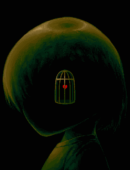
I guarded the cage
and you flew anyway.
I gave a signal they mistake
for a craving for flesh,
but I am hunting something without a name-
something beyond flesh and bones,
something I see in you, meant only for me.
You confuse me in your mind with a hunter;
I confuse you in mine with a soul.
And so I remain hanging-
zero success, no recognition.
When I denied access
and asked you to be my girlfriend,
you rejected me.
I told you never to talk to me again.
One day she returned
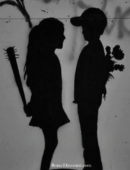
with a silencer on the gun-
no one noticed the shot,
no one saw the murder in between.
It was cold-blooded murder.
She thought she killed a man
who wanted only flesh.
I gave you respect, value, equal dignity,
and love when we were together,
but you stirred the fire in both of us,
took what rose in me,
and never gave it back.
You can make love with your eyes closed
and the lights off,
but you cannot fall in love with closed eyes.
The soul needs a picture to think.
You leaned in close enough
to taste my silence,
yet never caught
the whiskey underneath.
I stayed drunk on duty-
you left sober and blaming the cold.
Keep walking, dinosaur.
Some fires are lit
with invisible fuel
so the guardian
never has to admit
he was burning all along.
So I ask-
not her,
not the silence that answered-
what is love?
Love, it turns out,
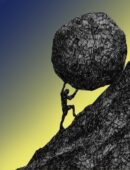
is the starvation I choose.








[…] Ronie Dinosaur Chapter 127 – What Is Love? […]