 ABOUT THE POEM:
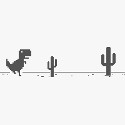
 The Law of Inevitability sits at a crossroads between philosophy and lived experience. This chapter is not concerned with changing the universe, correcting injustice, or reclaiming what was lost. It assumes-coldly and without ornament-that events unfold according to forces larger than desire. What has passed is sealed. What is happening now is already in motion. What will come does not require permission. This is not fatalism as laziness; it is inevitability as recognition. The opening lines establish a temporal triad: past, present, future. Each is stripped of emotional bargaining. There is no “if only,” no counterfactual fantasy. This matters because the speaker refuses the most common human reflex-rewriting history in the mind to soothe pain. Instead, the poem insists on orientation, not revision. Time is not an enemy here; it is a terrain already crossed, being crossed, and yet to be crossed. The pivotal question-“Then what remains to be done?”-is deceptively simple. It rejects dramatic solutions. No revenge. No transcendence. No miracle. The answer is almost aggressively ordinary: keep walking. Walking implies continuity, effort, and humility. You cannot walk arrogantly. You also cannot walk without friction. It is movement without spectacle. “How? With courage.” Courage here is not bravado or aggression. It is the willingness to move forward without guarantees. In this framework, courage replaces hope. Hope waits for external alignment; courage acts despite misalignment. This is consistent with the broader Ronie Dinosaur ethos: strength is internal, cultivated, and non-negotiable. “Where?” is answered not with a destination but with a method of orientation-looking at footsteps left behind. This is critical. The past is not a place to live in, but it is a map. Memory becomes instruction rather than obsession. The insistence on a clean heart and clear mind reinforces moral hygiene: resentment clouds judgment; confusion corrupts direction. Character is the final tool named, and it carries the most weight. Character is what persists when emotion fluctuates and belief collapses. It is not performative. It does not require witnesses. By ending with “And Ronie Dinosaur walks,” the text removes abstraction entirely. The philosophy is embodied. Someone is actually moving. This chapter functions as a stabilizer within the larger work. It does not escalate pain or dramatize loss. Instead, it locks in a rule: life does not pause for understanding. Meaning is not negotiated with the universe; it is enforced through conduct. The law of inevitability is not cruel-it is indifferent. What matters is how one carries oneself through it. This is not despair. It is adulthood.
Ronie Dinosaur Chapter 134 – The Law of Inevitability
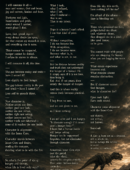
What was meant to happen
has already passed.
What is unfolding now
unfolds as it must.
What is destined to be
will surely arrive—
without a word spoken,
without an action taken.
Then what remains to be done?
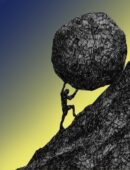
Keep walking.
How?
With courage.
Where?
By following the footsteps left behind,
with a clean heart and a clear mind,
with character.
And Ronie Dinosaur walks.























[…] Ronie Dinosaur Chapter 134 – The Law of Inevitability […]