 ABOUT THE POEM:
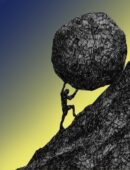
 This poem is a meditation on labor, responsibility, and masculine endurance. It distinguishes the work that carries real cost and moral weight from the distractions of performance and applause. The shepherd, teacher, and parent are archetypes of sustained, demanding labor: each sacrifices comfort, safety, or emotional ease for the sake of life, growth, and truth. The shepherd embodies physical, visceral labor. He works under conditions that are extreme and unglamorous: before sunrise, in ice rivers, in maggot mud, carrying the literal burden of survival. His love is practical and sacrificial, extended to creatures that can be replaced, yet mourned as if irreplaceable. The imagery underscores endurance, resilience, and hands-on ethical responsibility. The teacher represents intellectual and moral labor. He shapes minds, corrects failures, and gives his knowledge away at personal cost. His labor is largely unseen and unappreciated, emphasizing that the value of effort lies in its integrity, not recognition. The line “Gives away the only treasure he owns and prays it doesn’t burn his house down” shows the tangible stakes of ethical action. The parent symbolizes emotional labor: building another human being, nurturing them, and eventually releasing them into the world. This archetype captures sacrifice with uncertainty, highlighting the paradox of creating life only to watch it leave. The poem contrasts these three enduring responsibilities with “circus”—the fleeting, performative, or shallow pursuits of life: applause, coins, and spectacle. These are transient, superficial, and ultimately meaningless. The repeated declaration that “the rest is noise, and the noise dies first” emphasizes that true labor, grounded in sacrifice and responsibility, outlasts all performance or recognition. The opening lines set the intellectual frame by juxtaposing responsibility with depth of life. This inversion signals that what appears simple (tasks or roles) can contain profound existential weight. The poem operates as both observational and philosophical, offering a moral hierarchy of human labor and endurance. The style is minimalistic but tactile and brutal, with concrete imagery and unsentimental diction. The poem’s power derives from its visceral realism, clarity, and authority, rather than metaphorical flourish. It positions the speaker—and, by extension, the reader—among those who endure, witness, and act under cost, rather than those who perform for recognition.
Ronie Dinosaur Chapter 88 – Responsibility
Responsibility: parent → teacher → shepherd.
Depth of life: shepherd → teacher → parent.
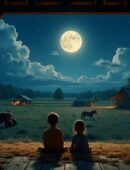
The shepherd owns the widest sky of silence,
walks miles before sunrise,
bathes in ice rivers,
lifts tomorrow’s meat on his shoulders today.
Mens sana in corpore sano
lived, not quoted.
He forges character under open sky
while professors describe the forge from leather chairs.
First: the shepherd.
Loves beasts that are not his blood,
kneels at 4 a.m. in maggot mud,
carries torn carcasses home anyway.
To love what can be replaced
and grieve it like it can’t.
Second: the teacher.
Drips fire into soft skulls,
rewrites failed exams at midnight
so mercy stays anonymous.
Gives away the only treasure he owns
and prays it doesn’t burn his house down.
Third: the parent.
Builds a human from scratch,
teaches it to walk away forever,
kneels to tie tiny shoes while tears fall
knowing those feet will run.
Manufactures a god
then kneels when it outgrows his sky.
Everything else is circus.
Coins flash, clowns leap,
crowd roars, curtain falls,
mouthful of confetti and blood.
Only these three remain
when the lights die
and applause rusts on the tongue.
Shepherd.
Teacher.
Parent.
The rest is noise,
and the noise dies first.

















[…] Ronie Dinosaur Chapter 88 – Responsibility […]