











 ABOUT THE POEM: "Fifteen Minutes Old" immediately plunges into the paradox of chronic existential pain versus the speaker's conscious present. The title is a sardonic joke; the speaker feels perpetually newborn and fresh to life, yet carries the burden of "grief [that] is almost thirty" and a life past forty. This temporal confusion emphasizes that the pain is not fleeting but a foundational, persistent state. The core philosophy established is simple: stay standing, keep walking, and the ultimate exit remains a voluntary decision, not a defeat. The speaker introduces powerful but brief anchors to memory—the roaring stadiums for "Sachin, Sachin," the simple joy of a kite, and the intimacy of a lover's touch. These moments are not revisited for nostalgia, but as brief, sharp counterpoints to the crushing reality of the self. The anticipated confrontation with the mirror reveals a profound, self-inflicted terror: realizing that the haunting "ghost" they spent their life reading about wears their "own face." This is the moment of ultimate self-recognition and existential dread. The subsequent section dissects the performance of virtue required by modern life (pasting "Character. Determination. Resilience. Strength" into bios) and rejects it violently. The speaker kills the digital distractions ("phone, desktop, everything") to break the habit of begging for validation. This leads to the terrifying, yet definitive, declaration of total solitude: "I have no one. None at all." This isolation is not a side effect of suffering; it is the "final truth" the speaker is still breathing to prove. The grief is complicated by a "furiously angry" drive against a nameless force—the "irrationality" that biased the universe against them and their rights. The speaker adopts the persistent, painful song of the caged bird from the previous chapter, using "mathematics" to logically conclude "there is no hope," yet choosing to act with character regardless. This is a rejection of comfort and transformation, labeling them as "lies" and "cheating with discipline." The transformation narratives of historical and mythical figures (Shiva, Gautama/Buddha) are dismissed because they supposedly shed their "weight" or struggle for easy answers. The speaker champions **"staying that carries the weight"—**the uncompromising maintenance of the current, hard-won state. The chapter ends on a note of radical acceptance and painful empowerment. The enjoyment of suffering is presented as a "new lens," a personal anti-magical magic created by the self, not handed out by the "giver, the universe." The commitment to walking is paramount; it is the "right" acquired through struggle, too valuable to throw away for an unfound possibility. The ultimate truth is that every story ends, and the answers are found within the questions—a final, self-contained philosophy of perseverance until the absolute end.
Ronie Dinosaur Chapter 20 – Fifteen Minutes Old
How do I know what grief is?
I was born fifteen minutes ago.
I say it as a joke
so no one hears the scream underneath:
the grief is almost thirty,
I’m past forty,
and the clock still laughs in my face.
What had to happen happened.
What’s happening is happening.
What will happen will come uninvited.
All I have to do is stay standing.
I don’t have to stop.
One day I’ll decide enough
and take the exit myself.
“Sachin, Sachin” used to thunder in stadiums.
I felt that same drop in the chest
when my kite cut the sky clean,
or when she whispered my name
and her fingers locked with mine.
But I’m not writing this for nostalgia.
One day perhaps I will see a mirror,
and the harder it will mock me.
The more I will bleed.
The tighter the air will get.
I will twist like a man who finally met the ghost
he spent his whole life reading about
and discovered
it wears his own face.
And I will be even more scared.
Character.
Determination.
Resilience.
Strength.
Against all odds.
I paste it in every bio.
Notifications never come.
So I killed them myself –
phone, desktop, everything.
Told the habit straight:
I don’t beg.
I don’t ask.
I don’t get.
Then I stop wanting.
That’s all I have left:
me
and the words I scratch on a notepad.
No reader.
No mirror worth looking into.
No one damned.
No dog, no cat,
No plant, no insect,
no wife, no children,
no mother, no sister,
no brother, no friend,
no girlfriend, no lover, no mistress,
no father, no god,
no one ahead, no one behind,
no one above, no one below.
I have no one.
None at all.
And that’s the final truth
I’m still breathing to prove.
And the difference is this:
it’s not just grief.
I am furiously angry at something
I don’t have a name for.
Time is running out.
When all the kids have things for free,
I look up at the sky
and can only keep looking – I can’t reach –
because in my time
the fucking clouds of irrationality came.
And I just keep looking,
keep walking,
in this biased universe.
It makes a fool of me.
What else can I be made?
But like the bird with persistence
that sings a song with a pain so deep,
from the cage –
because nothing else can be done –
I do the same mathematics in my mind
and decide there is no hope.
But this alone can be done with character,
so I do it alone.
And I will keep on
until I am alive.
How does he know the anatomy of sadness?
Just like she knows to sing when she can never break free.
Just like a woman who sells doesn’t know what she sells,
and in simple market slang,
like a customer knows the brothel.
Parvati eyed Shiva.
His search was broken.
Gautama got Sujata who brought kheer,
and he tasted another lie.
But I refuse to take anything,
even if it exists,
because I know the pattern,
and I don’t want to fall for lies.
Comfort is a lie.
Transformation is cheating with discipline.
They messed up their becoming,
because it is not the becoming –
it is the staying that carries the weight.
What you’re looking for
is the measure of who you actually are.
The weight of Shiva was gone
with the ghosts he carried as a bachelor.
The weight to acquire one’s right to knowledge
was gone with rejecting the shade of the tree.
I’m not telling myself not to transform
as circumstances present themselves.
But I will move
by the true will of my own heart,
and it asks for nothing
except to keep walking.
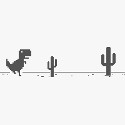
And Ronie Dinosaur is walking.
The witnesses of who I was are long gone,
and for who I am, there is no mirror.
The universe keeps me away from my rights,
and what was not given to me, I don’t beg for.
And yet I go on.
Not because the mathematics of my state conclude this,
but because I have been here before,
just as I am right now.
I have been walking for a long time.
Why would I lose my current state –
the state I acquired with so much struggle,
my right, my now?
Why would I throw it away for something
I have not even found?
Someone once asked me,
“How can you live like that?”
Discipline gives strength,
and somewhere along the way
I began to enjoy my suffering.
It became a new lens,
a completely new world,
almost anti-magical yet magical –
not the one handed to me
by the so-called giver, the universe.
You lack something in your life.
It is not the shortness of emotion.
Just like happiness,
sorrow is also beautiful.
Every living organism clings to its life.
Even a single cell refuses extinction.
So why did he push himself to the edge?
Because something was hurt.
He felt it on the inside.
How can anyone expect a man
to quit feeling that?
The one who runs away
from his true character
is not a man.
And I walk again.
The truth after this
I know as well as everyone else:
no one has come back alive from this creation.
Once one entered into the forest,
it remained there forever.
But it is human nature to make up stories,
to drag everything toward a happy ending
when the end is the end-nothing more.
Until then, I keep walking.
A story’s end lies in its starting point itself.
The answer to a question lies in the question itself.
And the one who is asking the question
has to become the one to answer it.








[…] Ronie Dinosaur Chapter 20 – Fifteen Minutes Old […]