 ABOUT THE POEM:
 This chapter examines abandonment not as drama, but as physics. Objects disappear when no one looks at them. Relationships dissolve the same way. The Door is about that moment—standing in an opening that is technically available, yet already hostile. The opening lines establish imbalance. Tears carry weight; smiles terrify. This inversion signals a relationship where vulnerability was ignored, while composure threatened others’ self-image. The speaker learns early that softness is expensive and visibility dangerous. The door functions as foresight. It is open, but not welcoming. The speaker understands—before rejection happens—that exit must be voluntary to preserve dignity. Waiting would only allow humiliation to arrive with force. Leaving early becomes self-rescue, not avoidance. The line about being “in my halves” reveals emotional overinvestment. The speaker carried others internally, while they never carried him at all. This asymmetry is the chapter’s core injury. People often believe relationships are mutual because they feel complete inside themselves, unaware that they are occupying space rent-free in someone else. The Vikram and Betaal reference sharpens this imbalance. One voice performs endlessly; the other listens, judges, and extracts meaning without cost. Entertainment replaces reciprocity. Morality becomes a tool for control rather than reflection. The speaker is examined, never understood. Disappearance follows predictably. When the speaker cannot see the others anymore, existence itself collapses. This is not metaphorical exaggeration—it is phenomenological truth. Reality requires witnesses. Without them, shared history evaporates. Replacement arrives quickly. The others move on, socially agile, adaptable. The speaker does not romanticize this; he accepts it. The pain is not jealousy, but incompatibility with casual replacement. He cannot “recreate coincidence” because coincidence was never the bond—it was attention. The chapter resists nostalgia. Change is assumed, not hoped for. The speaker expects people to grow meaner, not kinder, when unobserved. This expectation is not bitterness; it is pattern recognition. The sharpest turn comes with “politics.” Worth is revealed not emotionally, but structurally—how someone treats you once desire fades, once convenience ends. Silence becomes policy. Absence becomes strategy. The ending is surgical. No confrontation. No final speech. Just mutual erasure. They never hear his voice again. He never looks for them again. The relationship does not end—it is uninstalled. This chapter is not about heartbreak. It is about leaving before you are erased for them— and accepting that erasure still happens anyway. Walking continues, but lighter.
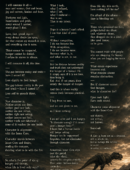
Ronie Dinosaur Chapter 70 – The Door
Those who didn’t value the salt in my tears,
a little smile on my face would have killed their ghosts out of fear.
Maybe I was just standing at the door.
The door was open-
and I had to understand what for:
to save myself from disgrace
before they slammed it in my face.
You might think the world of yourselves;
I was also a part of it-and you were,
each one of you, in my halves.
Your company to me was like Vikram and Betaal-
entertainment was your purpose,
and my morality was questioned most of all.
You never thought of me once you left.
I couldn’t see you, and as I didn’t see you,
we ceased to exist.
Of course, you were having fun with someone else,
but I wasn’t cool enough
to recreate such coincidence.
The world has changed over time-
so would you too.
I assumed this in your absence, all through.
You were mean and rude,
as expected from a friend,
faking affection because you had lust for me-
only till there could I follow your trend.
When you stopped reaching out with excuses,
I began to know my worth in your eyes-
and even your politics.
You never heard my voice since,
and I never looked at you,
because I didn’t find you.




















[…] Ronie Dinosaur Chapter 70 – The Door […]