 ABOUT THE POEM:
 This poem operates as a philosophical provocation rather than a lyrical confession. Its central argument is counterintuitive by design: that education, as commonly structured and accessed, can function as a form of poverty rather than liberation. Not material poverty-cognitive poverty. The poem challenges the assumption that accumulation equals growth. The speaker positions themselves as an “original witness,” rejecting inherited conclusions in favor of direct observation. This matters. The poem is less interested in what is taught and more interested in how knowing itself is constructed. Education here is not classrooms or degrees, but the internal machinery that decides what counts as truth. The recurring numerical metaphor-four and two-does heavy philosophical lifting. Reduction is usually understood as loss: four becoming two. The poem flips this. True reduction clarifies, multiplies, opens space. False reduction fragments: what was once shared becomes divided, competitive, scarce. This mirrors how ideas, when commodified or over-distributed without depth, lose coherence and become thinner rather than richer. “Easy access” is named as the real obstacle to learning. This is a sharp critique of the information age. When knowledge is instantly available, the discipline of inquiry weakens. Curiosity is replaced by consumption. Understanding is replaced by recognition. The poem suggests that struggle-cognitive friction-is necessary for genuine learning. The line about the poor mind never letting go of its mindset even after escaping poverty is psychologically precise. Systems can change faster than habits. One can acquire education yet still think in terms of scarcity, authority, and imitation. The poem implies that liberation is not structural but internal, and painfully slow. “Be your own light” risks sounding aphoristic, but within this context it functions as a logical conclusion, not a motivational slogan. If access corrupts learning and systems reproduce mental poverty, then autonomy of perception becomes the only reliable illumination. The final admission-“Reality may still differ”-is crucial. It saves the poem from dogma. This is not a doctrine, but a working theory. Knowledge is provisional. Certainty is suspect. What we know is temporary, and honesty requires admitting that. Overall, the poem belongs to a lineage of skeptical, anti-institutional philosophy. It does not flatter the reader. It assumes discomfort is productive. Its value lies not in poetic ornament, but in the clarity of its challenge: that what we call education may be training us to be smaller, not wiser.
Title – Education Is Poverty
I study now
what I observe—
an original witness,
conclusions my evidence.
Poverty,
and the poor mind:
they see becoming less
as four cut to two.
Truth is the opposite—
true reduction
turns two into four.
From four thoughts,
left with only two:
scarcity.
What was once shared by two
is now split among four—
real poverty.
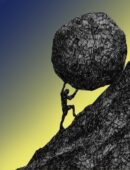
What blocks learning
is easy access itself.
Even if a poor mind sheds its poverty,
the mindset never lets go.
Be your own light.
Reality may still differ,
yet this is what we know,
for now.
We are all inside the cage;
no outside view,
no true point of reference.
Only the true will of heart.