 ABOUT THE POEM:
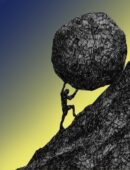
 Ronie Dinosaur Chapter 132: The World Runs on Courage sits inside a larger personal mythology where emotional survival is framed not as victory, healing, or redemption, but as continued movement without recognition. The poem argues-quietly but insistently-that the world persists not because of hope, optimism, or romance, but because some individuals refuse to surrender their inner human core, even when everything else has been consumed. The “monsters” in the poem are not abstract evils. They represent appetite: desire, exploitation, social pressure, emotional convenience, and the easy transactional nature of modern intimacy. These monsters do not attack; they are fed. People offer themselves to them willingly, often confusing desire with agency and consumption with connection. Against this backdrop, the narrator does not present himself as morally superior, but as fundamentally incompatible with that economy. The central wound is not rejection. It is exclusion from meaning. The speaker is haunted by the idea that something small-“a crumb,” “a petal”-was preserved within her, untouched by the world’s consumption, yet never offered to him. This preserved fragment becomes symbolic of authentic human intimacy: something fragile, unspectacular, and non-performative. The tragedy is not that others received more, but that what mattered most was never shared at all. By invoking his own name, Ronie Dinosaur transforms from an individual into an archetype: the one who does not devour, who does not demand proof, who asks only to feel rather than to take. This is a dangerous move artistically, but it is restrained by the poem’s refusal of triumph. There is no claim of moral victory, no demand for validation. The narrator does not “win” love, expose hypocrisy, or achieve catharsis. He simply keeps walking. The line “The world does not run on hope, children” is deliberately anti-consolatory. Hope is framed as passive, even indulgent. Courage, by contrast, is active and lonely. It is the act of continuing without assurance, without applause, without even the dignity of being chosen. Walking becomes the final ethic: movement without destination, persistence without reward. In this context, the poem functions less as a love poem and more as an ethical statement. It rejects the idea that emotional worth is determined by reciprocity or recognition. It insists that there is value in guarding what is human even when it goes unused, unseen, and unnamed. This chapter fits into a broader narrative of disconnection, where the self is not healed by union but stabilized by refusal-refusal to consume, to beg, to perform, or to collapse into bitterness. The walking is not hopeful. It is necessary. And that necessity, the poem suggests, is enough to keep the world from ending.
Ronie Dinosaur Chapter 132 – The World Runs on Courage
The world runs on courage alone-
otherwise the monsters
would have devoured everything.
Somewhere in her heart,
something must have been saved for me too;
while she fed the beasts by her own desire and will,
that girl my age could not have given it all away,
could not have fed every last crumb to them.
Somewhere a word, a feeling, must have lingered-
something my love never received,
something I never consumed,
something she never spoke-
otherwise nothing would remain.
Perhaps the world still turns
because of someone like Ronie Dinosaur;
otherwise it would have ended long ago.
Why did she feed the monsters
and offer me nothing?
Ask her yourself.
She does not know
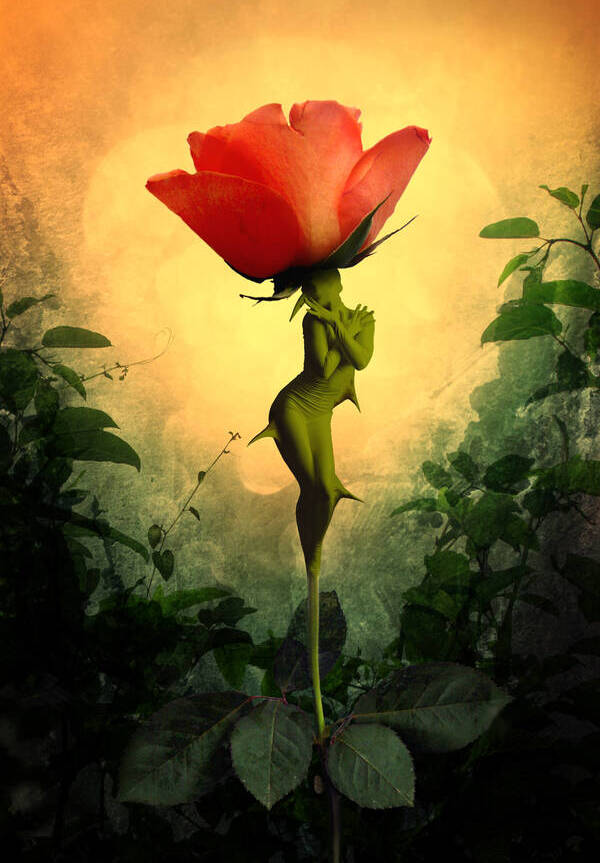
about the one petal
hidden in her,
from her.
But why she saved a crumb, somewhere-
I can tell you that:
only I could reach the place in her heart
where love unfolds petal by petal,
guarding something human
that cannot be consumed.
She fed the beasts with open hands,
poured out every petal but one-
a secret bloom no monster touched,
guarded by the man
who never asked to taste,
but only to feel.
She showed courage where her desire lay-
my intent, however beautiful,
seemed merely a casual feeler to her;
she matched the hardcore eaters
with her own fierce will.
To protect character
courage is required,
as well as strength.
You need courage to gather strength.
When strength falls short,
courage falters,
and so does character.
To safeguard whatever remains,
people grow clever-
hope is clever,
and so is a monster
and the woman who feeds him.
When a man is too weak to have courage, he hopes.
When a woman is too afraid to be alone, she becomes clever.
Monsters are the ultimate clever beings-
they trade in greed and ego
because they lack the strength
to simply be.
The world does not run on hope, children.
Ronie Dinosaur keeps walking.
No triumph.
No applause.
Just walking.



















[…] Ronie Dinosaur Chapter 132 – The World Runs on Courage […]