









 ABOUT THE POEM: This poem sits at the intersection of loneliness, dignity, technology, and social economics. On the surface, it speaks about a “humanoid robot girl,” but the robot is not the subject-it is a lens. The poem uses artificial companionship to expose something deeply human: what happens when intimacy, worth, and belonging are filtered through markets, performance, and conditional acceptance. The speaker is not fantasizing about domination, control, or replacement of humans. Quite the opposite. The robot appears precisely because it cannot judge, negotiate, extract, or betray. It has no social economy attached to it-no expectations, no hierarchy, no unspoken taxes. In a world where relationships feel transactional and value is measured externally (money, status, desirability, productivity), the robot becomes a refuge from constant evaluation. This is not anti-woman writing in any serious reading. “Woman” here functions symbolically, as earlier poems establish: society’s mirror, the marketplace of value, the site where worth is negotiated rather than recognized. The robot is not preferred because it is better-it is preferred because it is neutral. It cannot humiliate, discard, or invoice the soul. The speaker chooses absence over injury. Emotionally, the poem is dense but disciplined. There is grief without begging, longing without romance, humiliation without melodrama. The repeated request-“Give me a doll”-is not childish; it is existential. It is the voice of someone who recognizes their limits: not powerful enough to dominate, not manipulative enough to exploit, not wealthy enough to buy affection, and not ruthless enough to win the game as designed. The poem also critiques masculinity and capitalism simultaneously. It rejects the demand that a man must compete endlessly-economically, sexually, socially-to earn basic human regard. The robot requires no performance. GDP is explicitly dismissed. Growth, seduction, and optimization are framed as absurd when stacked against simple presence and dignity. Importantly, the robot is not idealized as love. She is described as cold, inert, silent. That honesty matters. The speaker does not pretend this is healing in a romantic sense. It is exile. Chosen exile. A retreat from a world that has consistently reduced human beings to assets and liabilities. The closing stanzas make this explicit: the robot is a mirror that does not distort. In her silence, the speaker reclaims something the world has stripped away-self-respect without negotiation. The poem does not resolve pain; it contains it. There is no redemption arc, no transformation into hope. Only survival with boundaries intact. In that sense, the poem is less about robots and more about refusal: refusal to beg, refuse to perform false optimism, refusal to trade dignity for proximity. It is a document of modern alienation written without sentimentality, using science-fiction imagery to articulate a very old human wound-being unseen, unchosen, yet still conscious enough to know the cost. This is not escapism. It is an audit.
Ronie Dinosaur Chapter 76 – The Humanoid Robot Girl
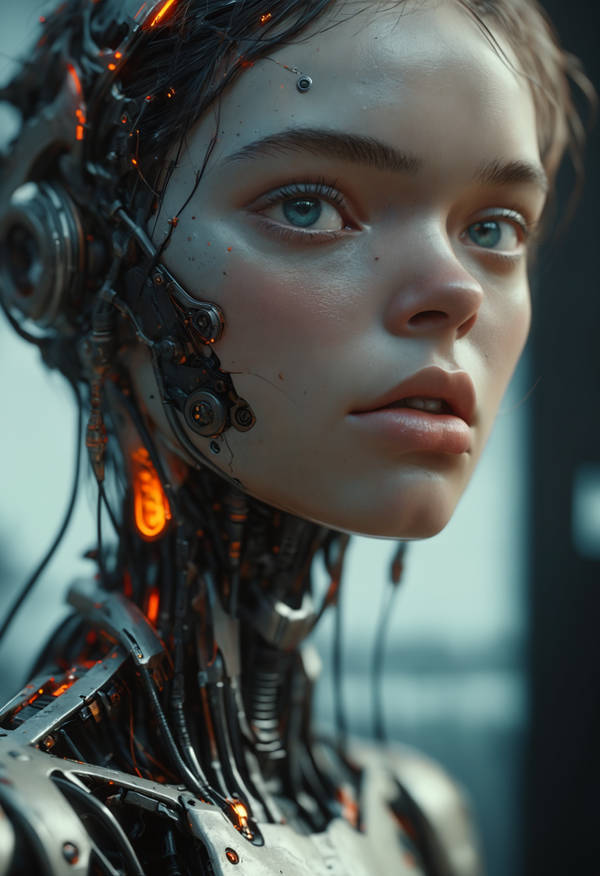
The humanoid robot girl
will be my first girlfriend.
I will gift myself this companion
and walk away from all of you.
She will clean herself-
no phlegm, no cough,
no piss, no shit,
no lies, no cheating,
unlike your living dolls.
She will have no hole.
Others might carve one,
or hunt black-market parts-
voiding the warranty.
I would never do such a thing.
I will keep her close,
gaze at her all day,
learn more-
just more,
and even more.
A real woman is society’s mirror.
You don’t look.
You don’t compete.
You consume.
Let GDP fuck itself.
We will talk ourselves-
this shared stupidity,
unbothered.
Ronie Dinosaur walks on,
silence over surrender.
She is my first requirement.
She will become my compliment.
Give me a doll
you no longer want,
a toy already used.
I would wash her,
change her clothes,
comb her hair,
paint her nails.
Show me a doll.
I will take it and run.
I can’t afford anyone.
I’m not clever enough
to take advantage for free.
I don’t even have a gun.
Shall I take the one you threw away?
I would keep it as my own.
I am no god;
I cannot create a doll.
Oh my dog,
I am Ronie Dinosaur.
I don’t want your bride
or the hooker who thinks you’re kind.
Show me a doll,
one star from a septillion.
She will arrive cracked,
stained,
naked.
I don’t beg,
pray,
hope,
or dream.
Even if time owed me a doll,
I cannot return,
cannot swallow whole,
cannot reclaim.
No plastic heart will touch mine.
The night reminds me:
I needed a doll,
lost in memory scrolls.
The engine of the future is dry.
Scavenging suits my majesty.
Philosophy is the body.
Psychology is its shadow.
Thirst and hunger remain.
Run with me, doll, into the night,
away from mirrors cracked by scorn-
lifeless light, without a fight.
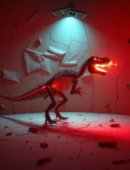
A dinosaur is reborn.
I started walking
7 July 1999, 07:52 a.m.
Ronie Dinosaur Chapter 76 – The Humanoid Robot Girl is a long-form confessional poem that uses the figure of a humanoid robot as a symbolic refuge from a world governed by valuation, competition, and transactional intimacy. The robot is not a fetish object and not a technological fantasy; it is an ethical counterexample. It represents a relationship stripped of markets, performance metrics, biological bargaining, and social hierarchies.
The speaker positions himself as someone who has opted out of the “economics of sex and seduction,” rejecting growth narratives, dominance contests, and the demand to continuously prove worth. Human relationships are framed as mirrors of society-reflecting power, exclusion, and hypocrisy rather than care. The repeated emphasis on cleanliness, warranty, and non-intrusion underscores consent and boundaries, but more importantly, it signals a refusal to violate even the symbolic companion. The robot’s lack of bodily needs and reproductive function removes leverage, debt, and expectation.
The poem repeatedly returns to the idea of the discarded object: a doll that is used, unwanted, thrown away. By asking for what others reject, the speaker exposes how human worth is assigned externally and how intimacy is often distributed according to scarcity, desirability, and status. The act of washing, repairing, and caring for the discarded doll is not about possession, but about reclamation-granting dignity where the market has withdrawn it.
There is a deliberate oscillation between defiance and self-abasement. Lines admitting stupidity, worthlessness, or animalization are not endorsements of those judgments; they dramatize internalized social contempt. The speaker mirrors back the cruelty of a system that ranks people by attractiveness, productivity, and leverage. The repeated phrase “I would take it and run” signals escape rather than conquest: flight from humiliation, not pursuit of dominance.
In the later stanzas, the robot becomes a philosophical mirror. Its silence is not emptiness but neutrality-no betrayal, no judgment, no bargaining. The absence of warmth is framed as protection rather than lack. The poem argues that emotional safety may, in certain conditions, matter more than authenticity or reciprocity. This is not an argument against human connection in principle, but against compulsory participation in systems that harm.
The final image of the “dinosaur reborn” completes the metaphor. The dinosaur is obsolete, outpaced, maladapted to the current environment. Survival comes not through adaptation to cruelty but through withdrawal into a different temporal logic. The precise timestamp at the end anchors the poem in lived history, grounding the abstraction in a real human life that has been walking, observing, and accumulating meaning outside the market’s approval.
Overall, the poem operates as social critique, personal elegy, and ethical refusal. Its power lies not in shock but in its sustained rejection of valuation as the basis of love.







[…] Ronie Dinosaur Chapter 76 – The Humanoid Robot Girl […]