 ABOUT THE POEM:
 Chapter 64, Poor Girl Syndrome, functions as a psychological counterweight to the preceding chapter’s examination of abundance and male privilege. Where Chapter 63 exposes how wealth and social power grant men moral immunity, this chapter turns inward and laterally, exploring how scarcity shapes female behavior, perception, and trust—especially in intimate contexts. This chapter is not an indictment of women, nor a moral ranking of genders. It is an observation of how prolonged exposure to vulnerability alters social instincts. The “poor girl syndrome” described here refers to a learned defensive posture: when survival depends on negotiation, attention is rarely neutral, and respect itself becomes suspicious. Within this framework, sincerity is misread as strategy, and kindness is interpreted as leverage. The speaker enters relationships without armor—“with only my heart”—and discovers that openness, in a transactional environment, destabilizes established dynamics. In a world where desire is expected to be predatory, a man who does not perform dominance or manipulation is perceived as naïve, unserious, or weak. Respect, rather than elevating him, diminishes his perceived value. This inversion is central to the chapter’s tension. The chapter also exposes a deeper discomfort: when power is unevenly distributed, people adapt not toward truth but toward safety. Women conditioned by objectification learn to anticipate extraction; men conditioned by deprivation misinterpret distance as personal failure. Both are shaped by the same system, but respond differently. What collapses between them is trust. Importantly, the speaker does not exempt himself from critique. The language of “instruction,” “training,” and “design” is intentionally harsh, revealing the corrosive logic scarcity imposes even on those who resist it. The chapter acknowledges an internal failure: mistaking emotional transparency for mutual understanding, and moral intention for social competence. The admission—“I left my mind behind”—marks a turning point from accusation to accountability. Structurally, the chapter narrows its scope as it progresses. It begins with cultural myth and gender expectation, moves through interpersonal breakdown, and ends in self-retrieval. Confidence disintegrates, but cognition returns. The speaker withdraws not in bitterness, but in recognition: survival without strategy is not virtue, it is exposure. Within the broader book, Chapter 64 deepens the thesis of First-Order Truth by demonstrating that poverty does not merely limit resources—it reprograms interpretation. Love, respect, and desire become unstable currencies. Misunderstanding is not incidental; it is systemic. This chapter asks the reader to sit with an uncomfortable reality: that intimacy, under conditions of inequality, is rarely innocent. Not because people are cruel, but because they are trained to be cautious. The chapter does not resolve this tension. It documents it. That documentation—unsoftened, personal, and precise—is its purpose.
Ronie Dinosaur Chapter – 64 – Poor Girl Syndrome
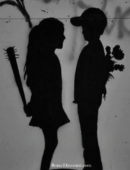
The classic Saleem–Anarkali,
gareeb ki bacchi syndrome-
Why respect me so much
when maybe you only want
my body?
They can’t digest it.
It’s beyond them.
That’s when I see in women their egos-
monsters, invisible,
unmasked only because I liked them.
They mistook my interest
for beauty alone-
partly true, partly not-
until, in the end,
it became nothing more
than my own reflection.
When no one gives without reason,
they whisper: What’s the catch?
There must be one.
The one man who respects her as a woman-
among all the others-
becomes the smallest man.
He is without common sense,
a fool, a boor, good for nothing.
Even a girl, barely grown,
can make a fool of him.
Yet in reality-
something she has known all her life-
men believe a woman’s mind
rests only below the waist.
She is used to being treated that way,
and to defending herself.
This fool disrupts the whole dynamic.
This is your god, oh my dog-
I am that nothing man,
without self-respect,
because I overvalued you.
The way I gave you information
was not appropriate.
I was too open-hearted.
No games. No play.
I should have instructed you,
trained you to act as I wanted-
to fulfill my objective-
instead of seeing you as a person.
I should have hidden,
should have taught you
to dance to my design.
I came with only my heart
and left my mind behind.
Confidence scattered like ash.
What was left of me
crawled back into shadows-
back to the mind.





















[…] Ronie Dinosaur Chapter – 64 – Poor Girl Syndrome […]