 ABOUT THE POEM:
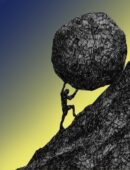
 Hungry sits at the intersection of deprivation and awareness. It is not a poem about wanting more—it is a poem written from the knowledge of having nothing left to lose. The speaker is not searching for meaning in an abstract sense; he is cataloguing what remains after decades of emotional rejection, social exclusion, and internal erosion. Hunger here is not merely physical or romantic. It is existential, cumulative, and time-bound. The poem opens by anchoring desire in youth: love as something once innocent, almost harmless. That innocence is quickly crushed by rejection, which becomes the formative force shaping the speaker’s internal world. From that point forward, life is not experienced as progression but as residue—what shame leaves behind when pity is exhausted. This establishes the emotional logic of the poem: the speaker does not expect sympathy, nor does he request redemption. The middle sections move outward into observation. The speaker sits alone in public spaces, registering smells, weather, trivial movements of trees and streets. These details matter because they show a mind still awake. Despite addiction, poverty, and self-loathing, perception remains sharp. The wind, the stubborn tree, the rain, and the sewer are not metaphors layered on top of emotion—they are the environment in which the emotion has learned to survive. Fame enters the poem not as ambition but as proof. The desire to “get famous” is not about applause or success; it is about verification. Having been erased repeatedly—by people, institutions, and circumstance—the speaker wants evidence that he existed at all. Fame becomes a crude but understandable substitute for love, recognition, or belonging. It is the last remaining measurable signal of value in a world that has offered none. The rehab passage is critical context. Writing is forbidden; expression is confiscated and destroyed. This reinforces the poem’s central tension: creation persists even when the world actively suppresses it. The survival of a single poem becomes symbolic—not heroic, not triumphant, but stubborn. The speaker hides it “in the heart,” not out of sentimentality, but necessity. The poem closes without resolution. There is no transformation, no moral lesson, no redemption arc. The speaker identifies himself as an “empty flask”—used, drained, intact. That image is honest and unsparing. The poem does not claim that suffering leads to wisdom or that endurance guarantees reward. It only asserts that awareness continues, and that continuation itself is an act of defiance. Hungry functions best as part of a larger sequence: a record of consciousness under pressure. It is not written to comfort. It is written to remain.
Ronie Dinosaur Chapter 58 – Hungry
Three decades ago-
the desire:
cute, innocent,
love at first sight.
The need rose from its crushing,
rejection firsthand.
It left my world
scrunched like dropped panties,
seams torn over time.
Filth draws shame,
not pity-
when sympathy is no game,
and “no” is not my name.
I know who I am-
where I come from,
and where I am going.
I know
what I do not even know.
They misunderstand:
character as mathematics,
love as a theorem.
And me-bleak, excessive-
sitting on a bench
near the stench of dried stool,
alone in a park
on a cloudy afternoon.
With the difference of a quarter second-
here, there, further-
I feel the wind,
hear the rustle of leaves.
I watch the wind dance with the trees
and let the moment be.
Except for one stubborn, unmoved fool.
Did the wind skip you, tree,
or are you just playing cool?
Just then, it moves too-phew.
Like a full standing ovation.
Something rises in me.
I want to get famous.
By night, high on beer
and smoke,
I sit on balcony stairs
while rain falls and
the gargoyle pisses everywhere.
Empty streets take showers-who cares?
Pit-pat, pit-pat, pit-pat, pit-pat.
Water flows into the sewer:
turd, dirt, kich-kich, society’s rear.
I think to myself-
What have you become,
a typical loser?
Do you want to be
what that girl-
too much makeup,
red lipstick-
is looking for?
But the sky clears. I see stars.
My heart speaks to the universe
above gutters and dope cars,
neon lights, fart streams, Pizza Hut, broken hearts.
And I realize:
I want to get famous.
I already have nothing,
so I have nothing to lose.
I want to get famous
to feel that I am something.
It was not allowed to write in rehab.
Hundreds of poems-they found them,
discarded them as waste,
tearing page by page.
This one survived.
I hid it in my heart.
Life has not rewarded
even my hard work.
I am that empty flask.




















[…] Ronie Dinosaur Chapter 58 – Hungry […]