 ABOUT THE POEM:
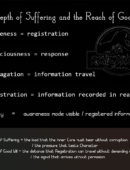
 “Anyways” is a reflective, meditative poem that juxtaposes divine endurance with human fragility, exploring the unique burden of conscious awareness. The poem opens with the image of a god who has survived thousands of years in exile, drowning in grief yet immune to the human fears of death and darkness. This framing immediately establishes the thematic contrast: divine existence absorbs suffering as a matter of duration, whereas human life amplifies suffering through knowledge, anticipation, and unchangeable consequences. The god’s endurance is effortless because he is unbound by mortality; humans, by contrast, face finite time and the terror of irreversible decisions. The poem moves seamlessly from the universal to the intensely personal. The speaker recounts walking away from a woman who “could have been mine, but wasn’t,” using this moment to examine the weight of personal choice and the gravity of moral and emotional responsibility. The metaphor of a train engine crushing the heart conveys the inescapable pressure of consequence, while the repeated acknowledgement of awareness-what has happened, where one is going, and what is inevitable-cements the poem’s insistence on deliberate engagement with reality, even when it is painful. The poem also situates human suffering in the ethical and emotional dimension. The speaker underscores that a man bows not to wealth, power, or addiction, but to the woman he loves, emphasizing that vulnerability and moral courage are interlinked. The four years of “combustion under pressure” and “awareness forged in substance abuse” are presented not as excuses, but as evidence of the inner crucible through which character and moral understanding are tested. This aligns with the overarching theme of self-discipline under extreme emotional pressure, demonstrating that human courage requires both knowledge of pain and deliberate navigation through it. Structurally, the poem uses short, deliberate line breaks to emphasize pauses, reflection, and weight. Ellipses and dashes are employed sparingly to capture hesitation, uncertainty, and the pacing of thought under pressure. The closing line, “Ronie kept walking anyway,” crystallizes the moral thesis: action, choice, and integrity are valuable precisely because they are made in full awareness of risk, loss, and emotional cost. The poem refuses melodrama or self-pity, instead presenting stoicism and reflection as forms of ethical engagement. The work resonates with themes explored in your broader writings, including Sorcery, particularly the tension between desire, consent, and moral accountability. The poem could function as a stand-alone reflection on grief, moral courage, and human awareness, while simultaneously advancing your larger narrative arc: that character is defined by deliberate action under the weight of loss and ambiguity. It exemplifies introspective, ethically anchored epic poetry that balances personal narrative, philosophical reflection, and emotional intensity.
Anyways
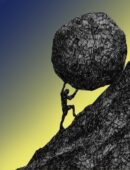
A god endured
thousands of years in exile,
drowned in grief-yet, sweetheart,
he feared neither death
nor darkness
the way a human does.
For him, it was merely time passing.
But to know in advance
that pitch-black nothingness awaits,
to watch irreplaceable human years burn away,
to carry the terror
that life could have been otherwise-yet isn’t-
and still to face it all
by deliberate choice…
that is something else entirely.
A man bows his head
not to money, power,
or addiction,
but to the woman he loves.
When I started walking away from her-
the one who could have been mine, but wasn’t-
I felt the weight
of a train engine
crushing my heart.
I knew what had happened.
I knew where I was going.
I knew what was going to happen.
Four years of combustion under pressure,
awareness forged in substance abuse.
Ronie kept walking anyway.