 ABOUT THE POEM:
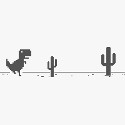
 This chapter deepens the emotional archaeology of the book by tracing a single early wound—humiliation—and showing how it silently shaped decades of behavior. Unlike earlier chapters that operate through verdicts and philosophical reckoning, this one works through memory and comparison. It is less accusatory and more observational. The narrator is not prosecuting himself here; he is standing still while time walks past him and noting what that feels like. The initiating moment is deceptively small: love at first sight, humiliation, rejection. What matters is not the rejection itself, but the response to it—pride and silence. That response becomes a survival strategy, carried forward unexamined. The poem implies that humiliation was not resolved; it was managed. Silence was adopted as armor, but armor also prevents touch. This chapter shows the long-term cost of that decision without dramatizing it. Time is a central antagonist, but not a cruel one. It is portrayed as indifferent and efficient, slipping through fingers the way everything else does. The comparison to a shepherd-god with centuries of silence introduces a subtle asymmetry: gods have time to understand life while living it; humans do not. The narrator’s tragedy is not ignorance or stupidity, but compression. Life demanded understanding in real time, without rehearsal. The bench becomes the chapter’s physical anchor. It collapses school, college, and adulthood into a single recurring location, reinforcing the sense of stasis. Others rise, move forward, and become “full lives.” The narrator remains a constant—unchanged, watching. This contrast is handled without envy or bitterness. Instead, it produces a quieter emotion: erasure. He does not resent them for leaving. He notes that they did. The photograph motif sharpens this erasure. In others’ albums, he exists as a background figure, a curiosity. In his own album, he does not exist at all. This inversion is devastating precisely because it is mundane. No villain, no dramatic betrayal—just asymmetric memory. The past remembers him less than he remembers it. The dinosaur’s reappearance is important. It is no longer a symbol of rage, power, or defiance. It is patient, wordless, companionable. The dinosaur does not instruct or console. It waits. This suggests a shift in the book’s internal logic: meaning will no longer come from confrontation, but from endurance. Silence, once a defense, now becomes a teacher. The closing line, “I grieve, stop, and walk again,” is restrained and deliberate. There is grief, but no collapse. There is stopping, but not permanent paralysis. Walking again is not framed as triumph or renewal—just continuation. In the architecture of the book, this chapter functions as a hinge: humiliation is no longer something to overcome or justify. It is acknowledged, carried, and placed down gently enough to allow movement. This chapter earns its place by refusing melodrama and refusing hope as spectacle. It shows how a life can be quietly shaped by what was never processed, and how standing up again does not require revelation—only the decision to move, even while still carrying silence.
Ronie Dinosaur Chapter 62 – Humiliation
To counter humiliation
from a girl in school-
love at first sight-
I armed myself with pride and silence.
The next time I stood before a girl,
simply rejected.
I had to live life and know it at once.
He-the shepherd, the god-
had centuries of silence for both.
I had none.
Time slipped through my fingers
the way water, sand, coins, people, and years slip:
quietly, completely,
leaving only the wet mark on the palm
and the question
how two small hands can lose an entire universe.
I sit on the same cracked wooden bench
from school, from college,
where I once sat with the ones I loved.
They stood up, walked forward,
grew soft dimples of satisfaction
the way bread rises when life kneads it properly.
They became full lives.
I became only the ghost in their old photographs.
When they flip through albums,
they might pause, smile,
spot the boy beside them
and think, “Whatever happened to him?”
When I open the same album,
I search every frame
and never find myself.
I only find them-
laughing, younger,
already leaving.
Like the girl whom I loved so much,
I could only see her going away,
on the last day of school,
on a street on which she came to me once.
On the very bench I shared with college friend
I shared on the first day of college,
only to never find her again from outside the classroom.
They lived what I could only watch.
They surpassed what I could only imagine.
The world moved on
and politely forgot to take me with it.
I am still here,
on the bench,
holding the empty space
where my own reflection should be.
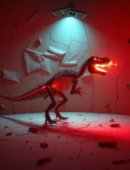
The dinosaur looks at the photograph too.
He sees the missing boy.
He does not roar.
He simply sits beside me
and waits
until the silence teaches me
how to stand up again.
I grieve, stop, and walk again.


















[…] Ronie Dinosaur Chapter 62 – Humiliation […]